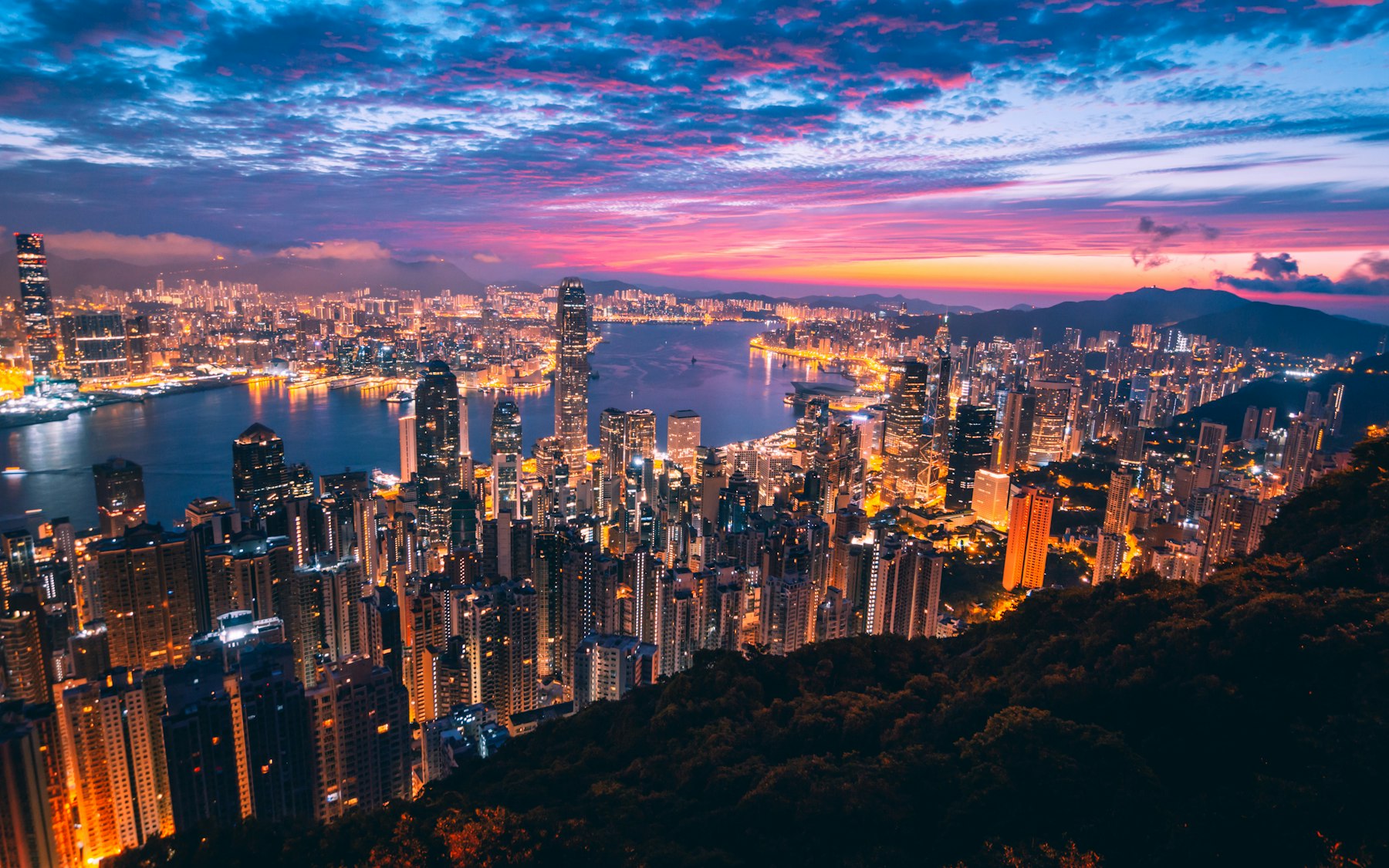
It is one of the most underrated family destinations in Asia: a world-class metro system with lifts at every major station, a harbor crossing children remember for years, dim sum as a family sport, and a city compact enough to cover real ground without losing anyone.
Route /en/on-the-ground/getting-around/hong-kong-with-kids//Coord MTR · OCTOPUS · STAR FERRY · DIM SUM · LANTAU
Field desk no. 01
MTR lifts
98%
STATION COVERAGE
Star Ferry
HK$3
LOWER DECK FARE
Best season
Oct–Dec
WEATHER WINDOW
Updated
May 2026
FIELD VERIFIED
Primary signalMTR — lifts everywhereField checkThe Star Ferry crossingNext layerDim sum with the family
§ 01
The field test before you land.
01
MTR accessibility
The MTR is the backbone. It has lifts at nearly every major interchange and island-line station. Strollers are not only allowed — they are common. Plan the first day around MTR logic, not taxi logic.
Get Octopus cards for everyone at the airport MTR station before you leave arrivals. Children under three ride free on MTR. Ages three to eleven pay child fares automatically with a child Octopus card.
Check · child card eligibilityCheck · top-up at 7-Eleven
03
Neighborhood anchor
Tsim Sha Tsui gives families the best daily logistics: the MTR interchange is right there, the Star Ferry pier is a ten-minute walk, and Kowloon Park provides outdoor space that is rare in Hong Kong.
Check · hotel stroller storageCheck · room size for families
04
Food strategy
Dim sum for breakfast and lunch, congee for slow mornings, roast goose or roast duck for dinner. The city has 7-Elevens every hundred meters with warm food, cold drinks, and snacks at any hour.
Check · yum cha trolley restaurantsCheck · cha chaan teng cafes
05
Weather window
October through December is the sweet spot: 20-25°C, low humidity, and no typhoon risk. Summer works in short bursts from air-conditioned MTR to air-conditioned mall, but sustained outdoor time is hard on young children.
Check · typhoon signal calendarCheck · indoor backup plans
§ 02
Where the city earns it.
Six decisions to make early
MTR vs. taxiThe MTR is faster, cheaper, and fully accessible — taxis are backup when the stroller becomes a liability at the end of the day.
MTR first / Taxi = rain or meltdown
Disneyland vs. Ocean ParkDisneyland for under-eights and Disney fans; Ocean Park for older children who want rides, animals, and a park that feels distinctly Hong Kong.
Age decides / One day each if budget allows
Peak Tram timingBook the tram online to skip the queue. Go at dusk for the full harbor-lights payoff. The view platform at the top is free once you are up there.
Dusk / Book ahead / Skip the mall
Lantau timingThe Ngong Ping cable car and Big Buddha need a half day minimum. Go on a weekday if possible — weekend queues are long and the gondola wait with young children is hard.
Weekday / Half day / Bring snacks
Dim sum strategyGo early — a proper yum cha session starts at 7am or 8am. The trolley restaurants are the most fun for children; point-and-choose ordering removes the language barrier entirely.
Early morning / Trolley style / Child portions
LanguageCantonese is the first language but English is universal in any tourist-adjacent context. MTR signs, menus, and hotel staff will all be English-fluent. The city is easy to navigate with zero Cantonese.
English works / No Cantonese needed
Reserved guides below this hub
MTR with a StrollerHow the MTR system handles strollers, which stations have lifts, and how to navigate the network without folding.
L4-01
Octopus Card for FamiliesHow to set up Octopus cards for the whole family, child fare ages, and where it works beyond the MTR.
L4-02
Star Ferry with KidsThe Star Ferry crossing as a ten-minute harbor spectacle children genuinely remember.
L4-03
Disneyland vs. Ocean ParkWhich park is worth a full day, which one disappoints, and how age changes the answer.
L4-04
Lantau Island Day TripHow to do the Ngong Ping cable car, the Big Buddha, and Tai O fishing village with children.
L4-05
Dim Sum with KidsWhich dishes work for toddlers, how to point-order, and why dim sum is one of the best family meals in travel.
L4-06
Peak Tram & Victoria PeakThe ride up, what to do at the top, and how to skip the tourist trap shops for the actual view.
L4-07
Best Neighborhoods for FamiliesTsim Sha Tsui vs. Sham Shui Po vs. Lantau: where to stay based on your priorities and budget.
L4-08
Heat & Humidity with KidsManaging Hong Kong's summer heat, typhoon season timing, and the mall-hopping survival strategy.
L4-09
Hong Kong vs. Tokyo for FamiliesA direct comparison of Asia's two most family-ready cities: ease, cost, language, food, and logistics.
L4-10
§ 03
Trip shape changes the answer.
Three daysMTR basics, Star Ferry, Peak Tram, one dim sum session, Tsim Sha Tsui waterfront
Core city / No parks needed
Five daysAdd Disneyland or Ocean Park on day four, Lantau Island on day five
Standard family trip / Two excursions
One weekAdd Sham Shui Po for street food and local neighborhood life, Lamma or Cheung Chau ferry day
Deep trip / Outlying islands
Transit stopTwenty-four hour layover: Star Ferry, dim sum breakfast, harbor promenade, back to airport
One anchor / No stroller needed
§ 04
The decision brief in order.
Rule 01
The MTR is the operating system.
Every other decision — where to stay, what to do on day one, how to manage afternoon naps — flows from the MTR map. Learn it first and the city becomes easy.
Rule 02
The Octopus card removes friction.
Cash is unnecessary for three days of movement. The card pays for every MTR ride, every bus, the Star Ferry, trams, and most 7-Eleven purchases. Get it at the airport and top it up once.
Rule 03
The Star Ferry is not just transport.
Ten minutes on the lower deck with a harbor view is one of the best HK$3 experiences in travel. Take it in both directions at different times of day. It costs almost nothing and children remember it.
Rule 04
Dim sum is the best family meal in the city.
Point-ordering removes the language barrier. The trolley format keeps young children engaged. Egg tarts, turnip cake, and steamed buns convert most toddlers. Arrive by 9am at a yum cha house for the full trolley experience.
Rule 05
Build heat escapes into every afternoon.
October through December this is irrelevant. June through September, plan every afternoon around air conditioning: shopping malls, the Hong Kong Museum of History, the Science Museum, or back to the hotel.
Rule 06
Lantau needs a whole day and a weekday.
The Ngong Ping cable car, the Big Buddha, and Tai O fishing village cannot be rushed. Weekend crowds make the gondola queue unmanageable with young children. Book tickets online, leave early, carry snacks.
§ 05
Reader questions before committing.
Useful edge cases to check.
Is Hong Kong good for families with young children? Yes — and it is consistently underrated. The MTR has lifts at nearly every major station, strollers are common and accepted everywhere, food is available at all hours, and the city is extraordinarily safe.
How do you get around Hong Kong with a stroller? The MTR is the primary answer. It has lift access at most stations, wide doors, and clear signage. Strollers are allowed on all MTR lines and the Star Ferry. Taxis are abundant and cheap for when the stroller becomes a liability.
Is Hong Kong Disneyland worth it? For children under eight, yes — the park is small enough to do in one day without a meltdown, and crowds are manageable compared to Orlando or Tokyo. Older children and Disney superfans may find it limited.
Is Hong Kong food safe for young children? Yes. Hong Kong has extremely high food hygiene standards, dim sum is inherently child-friendly, and even street food stalls operate under scrutiny. The same common-sense rules apply as anywhere — avoid raw shellfish for toddlers — but there is nothing categorically risky about eating widely in Hong Kong with children.
This L3 page keeps the ten deeper links in place so the article network can be filled out without flattening the travel architecture.
On the Ground Desk / Getting Around / L3 Mini-Hub 001
Hong Kong with Kids — Getting Around, What to Do, and Why It Works
How to navigate Hong Kong with children: the MTR with a stroller, the Star Ferry, the Peak Tram, dim sum etiquette with toddlers, and why Hong Kong is one of the most underrated family destinations in Asia.
MTR lifts everywhere — Star Ferry — dim sum — Lantau
MTR lifts: at nearly every major interchange and island-line station
Octopus card: children under three ride MTR free; ages three to eleven pay child fares
Star Ferry lower deck: HK$3 per crossing
Best season: October through December — 20-25°C, low humidity, no typhoons
The memorable thing: Hong Kong is not a city you endure with children. It is a city that rewards traveling with them — if you use the MTR, buy Octopus cards at the airport, and start every morning with dim sum.
Hong Kong is consistently underrated as a family destination, usually because it sounds intense. A city of seven million people on a small peninsula with no obvious beach payoff looks like work on a map. In practice, it is one of the most operationally smooth family trips in Asia. The MTR is among the best urban rail systems in the world for families: it has lifts at nearly every major interchange, clear English signage throughout, wide doors that take a stroller without drama, and a network that connects almost everything worth seeing.
The Octopus card removes the cash-and-change friction that exhausts families in unfamiliar cities. One card per person, loaded at the airport on arrival, pays for the MTR, the buses, the Star Ferry, the trams, and most convenience stores. Children under three ride free on the MTR. Children three to eleven pay half fare with a child Octopus card. The system is designed to be transparent.
Getting Around / Field Note
The MTR network for families
The MTR is the operating system of a Hong Kong family trip. It runs from 6am to midnight or later, covers every major district, and costs a fraction of what equivalent taxi rides would. The key feature for families is lift access: the MTR publishes a lift-station map on mtr.com.hk and the accessibility coverage at main interchanges — Kowloon Tong, Tsim Sha Tsui, Central, Admiralty — is comprehensive. You can run a stroller through most of the network without folding it once.
Peak hours between 8am and 9:30am and 5:30pm and 7pm are genuinely crowded. The trains run every two to three minutes and the platform screen doors mean boarding is orderly. Strollers are expected and do not draw attention. The priority seating areas near doors accommodate strollers and tired toddlers. The single most important logistics move on arrival is getting Octopus cards before you leave the airport MTR station — the machines are inside arrivals and the cards are loaded and ready in five minutes. In practice, the traveler should translate this into one visible decision before moving on: what gets booked, what gets verified, what gets saved offline, and what can safely remain flexible. That discipline is what turns a travel topic from inspiration into an operating plan.
Getting Around / Field Note
The Octopus card for the whole family
The Octopus card is the travel payment card that works across every piece of public transport in Hong Kong: MTR, KMB buses, mini-buses, the Star Ferry, the Peak Tram, trams on Hong Kong Island, and the Airport Express. It also works at 7-Eleven, McDonald's, Park n Shop, Wellcome supermarkets, and most large fast-food chains. For families, the practical implication is that you can leave your wallet in the hotel room for most of the day.
Child Octopus cards for ages three to eleven charge half the adult fare on the MTR automatically. Under three is free. The cards cost HK$50 to get, of which HK$30 is the stored value deposit and HK$20 is the initial balance. You top them up at any MTR customer service machine or at a 7-Eleven in about thirty seconds. The discipline of the Octopus card system is part of why Hong Kong families move so efficiently through the city — there is no fumbling with notes and coins at the gate. In practice, the traveler should translate this into one visible decision before moving on: what gets booked, what gets verified, what gets saved offline, and what can safely remain flexible. That discipline is what turns a travel topic from inspiration into an operating plan.
Getting Around / Field Note
The Star Ferry as a family experience
The Star Ferry has been crossing Victoria Harbour since 1888. The lower deck costs HK$3. The crossing takes about ten minutes. It goes between Tsim Sha Tsui on the Kowloon side and Central or Wan Chai on Hong Kong Island. On a clear evening, the harbor view from the bow of the lower deck — the island skyline lit up, the container ships moving, the Star Ferry's green and white hull heeling slightly in the wash — is one of the most purely cinematic urban experiences in travel.
For children, the appeal is more direct: the boat moves, the water is right there, and you can see everything. Take it in both directions and at different times. The early morning crossing has a different quality from the evening one. The Tsim Sha Tsui pier is a short walk from the main hotel district in TST; the Central pier puts you at the base of the Mid-Levels escalator and within walking distance of the main shopping and eating streets. The ferry costs almost nothing, runs frequently, and takes about the same time as the MTR tunnel crossing when you include the walk. In practice, the traveler should translate this into one visible decision before moving on: what gets booked, what gets verified, what gets saved offline, and what can safely remain flexible. That discipline is what turns a travel topic from inspiration into an operating plan.
Getting Around / Field Note
Dim sum as a family activity
A yum cha dim sum session at a trolley restaurant is one of the best family dining experiences in travel, full stop. The format removes the language barrier entirely: the trolley comes to the table, you point at what looks good, the server stamps your order card, and plates arrive. For families with toddlers who need to move around and cannot sit still through a long formal meal, the constant arrival of small plates and the interest of watching trolleys navigate a full dining room keeps children engaged for an hour without anyone losing their mind.
The dishes that reliably work with children: har gow (shrimp dumplings), siu mai (pork and shrimp), char siu bao (BBQ pork buns, steamed or baked), cheong fun (rice noodle rolls), wu gok (taro dumplings with pork), dan tat (egg tarts), mango pudding. The dishes to avoid until children are old enough for the texture: chicken feet, tripe, turnip cake (some children love it, some strongly do not). A proper yum cha session starts early — the best restaurants open at 7am or 8am, the trolleys are fullest before 10am, and the atmosphere of a full Hong Kong dim sum house at 8:30 on a Saturday morning is genuinely worth arranging your schedule around. In practice, the traveler should translate this into one visible decision before moving on: what gets booked, what gets verified, what gets saved offline, and what can safely remain flexible. That discipline is what turns a travel topic from inspiration into an operating plan.
Getting Around / Field Note
The Peak Tram and Victoria Peak
The Peak Tram is one of the oldest funicular railways in Asia, running since 1888. The ride is eight minutes of steep incline through the mid-levels district, arriving at the Peak Tower at 396 metres above sea level. The view from the top — on a clear day — is one of the definitive Hong Kong images: the island's towers, the harbour, Kowloon stretching north. For children, the ascent itself is exciting: the tram leans back at an angle that feels dramatic even when you know it is perfectly safe.
The practical notes: book tickets online to skip the queue, which can stretch to an hour at peak times. The Peak Tower at the top has a Madame Tussauds and a series of shops that can be ignored entirely. The free viewing platform on the outside level of the Peak Tower has the best unobstructed harbor view. The Peak Circle Walk is a 3.5km flat path around the peak with extraordinary views in both directions and can be done in under an hour with children who can walk. Take the tram down at dusk for the harbor lights. In practice, the traveler should translate this into one visible decision before moving on: what gets booked, what gets verified, what gets saved offline, and what can safely remain flexible. That discipline is what turns a travel topic from inspiration into an operating plan.
Getting Around / Field Note
Ocean Park vs. Hong Kong Disneyland
Hong Kong Disneyland is the smallest Disney park in the world. It has the essentials — Tomorrowland, Fantasyland, and a Grizzly Gulch — but none of the scale of Orlando, Tokyo, or Paris. For children under eight who are Disney-aware, it is genuinely wonderful: the park is completable in one day, the crowds are manageable by Disney standards, and the hotel package is solid. For older children who want the full Disney experience or adults with prior Disney exposure, it will feel thin.
Ocean Park is a very different proposition: it is a Hong Kong institution, it has a serious aquarium section, a panda exhibit, a cable car across the park, and a lower-mountain amusement section with real thrill rides. It is not a theme park in the Disney sense — the theming is loose and the atmosphere is more local — but for children who like animals, water, and genuine rides, it is the stronger day. The decision is simple: under eight or Disney-committed, go to Disneyland; nine and older with no strong Disney preference, Ocean Park usually wins. In practice, the traveler should translate this into one visible decision before moving on: what gets booked, what gets verified, what gets saved offline, and what can safely remain flexible. That discipline is what turns a travel topic from inspiration into an operating plan.
Getting Around / Field Note
Lantau Island day trip
Lantau is Hong Kong's largest outlying island and holds three very different attractions: the Ngong Ping 360 cable car, the Tian Tan Buddha (the Big Buddha), and Tai O fishing village. The cable car ride is 25 minutes over mountains and forested hillside, arriving at Ngong Ping village at the base of the Buddha. The Buddha itself is reached by climbing 268 steps — doable for most children over five with encouragement and a promised reward at the top. Tai O is a 45-minute bus ride from Ngong Ping and is one of the few places in Hong Kong that looks nothing like the rest of Hong Kong: stilt houses over a creek, dried seafood stalls, and a slow fishing-village pace.
The Lantau day requires planning. The cable car books up on weekends; weekday visits with advance tickets are significantly more relaxed. The journey from Tsim Sha Tsui is about an hour door to door. Pack enough food and water for a full day because Ngong Ping's restaurant options are limited and overpriced. The weather on Lantau differs from the city — it is often cooler and windier at elevation. Children who managed the MTR all day will be fine, but the return cable car plus MTR journey at the end of a full Lantau day is long, and the 5:30pm cable car crowds can be intense. In practice, the traveler should translate this into one visible decision before moving on: what gets booked, what gets verified, what gets saved offline, and what can safely remain flexible. That discipline is what turns a travel topic from inspiration into an operating plan.
Getting Around / Field Note
Neighborhoods for families
Tsim Sha Tsui on the Kowloon side is the best all-round family base. The hotel density is high, room sizes tend to be larger than Hong Kong Island equivalents at the same price, the MTR interchange connects everywhere, the Star Ferry pier is a short walk, the Kowloon Promenade along the harbour gives outdoor space with a view, and Kowloon Park is a ten-minute walk away for afternoons when children need to run. The restaurant density in TST means nobody walks more than five minutes for food at any hour.
Sham Shui Po is a different kind of neighborhood: Hong Kong's most local district, full of street food, fabric markets, electronics shops, and cha chaan teng cafes that look exactly as they have since the 1970s. It is not a family base but it is a great family half-day for older children who are interested in Hong Kong as a city rather than as a theme park. Lantau works as a base only if the entire trip is anchored to Disneyland or if the family wants a quieter, more village-feel stay at Discovery Bay. Central and Wan Chai are excellent for adults but the hotel rooms at equivalent prices are smaller and the street-level experience is less immediately accessible for young children. In practice, the traveler should translate this into one visible decision before moving on: what gets booked, what gets verified, what gets saved offline, and what can safely remain flexible. That discipline is what turns a travel topic from inspiration into an operating plan.
Getting Around / Field Note
Heat, humidity, and typhoon season
Hong Kong's climate divides cleanly into the good months and the hard months. October through December is ideal for families: temperatures are in the low-to-mid twenties Celsius, humidity drops to comfortable levels, the skies are often clear, and typhoon season is over. January and February can be cool and occasionally damp — pack a light layer — but the streets are quieter and the air is clean. March and April are pleasant and the azaleas bloom on the hillsides.
June through September is a different calculation. The temperature sits in the low-to-mid thirties Celsius and the humidity makes it feel higher. Typhoon season runs June through November with the peak in August and September. The Hong Kong Observatory issues numbered typhoon signals — a Signal 8 or higher shuts the city down including public transport. For families planning around school holidays, the August trip is doable but requires accepting that every afternoon will be spent in air conditioning and that the outdoor experience will be limited to early mornings. The city has adapted — its malls and museums are world-class and the MTR runs air-conditioned trains continuously — but sustained outdoor time is hard on young children in summer Hong Kong. In practice, the traveler should translate this into one visible decision before moving on: what gets booked, what gets verified, what gets saved offline, and what can safely remain flexible. That discipline is what turns a travel topic from inspiration into an operating plan.
Getting Around / Field Note
Language, safety, and the practical reality
Cantonese is the first language of Hong Kong and the language of everyday life. English is the second official language and it is universal in any context that involves tourists, transport, hotels, or restaurants. MTR announcements are in Cantonese, Mandarin, and English. Restaurant menus at any non-specialist local restaurant will have English. Hotel staff will be English-fluent. Taxis can be directed with a written address or a phone showing a maps pin. A family with zero Cantonese will move through Hong Kong without language difficulty in any context that a tourist would encounter.
Safety is not a concern by the standards of international cities. Street crime in tourist areas is exceptionally low. The density of the city — people everywhere, at all hours — creates a kind of ambient watchfulness. Children are welcomed and treated well in restaurants, shops, and on public transport. There are no significant health advisories for Hong Kong beyond the standard international travel precautions. The city has world-class hospitals and pharmacies on nearly every block. Food hygiene standards are among the highest in Asia. In practice, the traveler should translate this into one visible decision before moving on: what gets booked, what gets verified, what gets saved offline, and what can safely remain flexible. That discipline is what turns a travel topic from inspiration into an operating plan.
A direct comparison of Asia's two most family-ready cities: ease, cost, language, food, and logistics.
The deeper map this page creates.
The L3 page has to do two jobs at once: answer the broad query today and create enough editorial gravity for future L4 articles. The child routes below are reserved article surfaces with a specific reason to exist, a parent topic to inherit, and a narrower reader problem to solve.
That is the difference between a topic cluster and a pile of links. The parent page carries the thesis, the decision order, the official-source discipline, and the internal linking structure. The child pages can then go deep without having to re-explain the entire lane.
L4 expansion / 01
MTR with a Stroller
How the MTR system handles strollers, which stations have lifts, and how to navigate the network without folding. This future article should not be a thin answer. It should open with the decision pressure, name the traveler who needs it, give the exact verification or booking move, then show how the wrong version of the decision fails in the real trip.
For this Hong Kong with Kids cluster, the MTR with a Stroller leaf should inherit the parent logic: Hong Kong is not a city you endure with children — it is a city that rewards traveling with them, if you use the MTR correctly. The child page should go narrower without becoming smaller. It should include official-source checks where rules can change, clear internal links back to Getting Around, and a practical final action that tells the reader what to do before they leave the page.
L4 expansion / 02
Octopus Card for Families
How to set up Octopus cards for the whole family, child fare ages, and where it works beyond the MTR. This future article should not be a thin answer. It should open with the decision pressure, name the traveler who needs it, give the exact verification or booking move, then show how the wrong version of the decision fails in the real trip.
For this Hong Kong with Kids cluster, the Octopus Card for Families leaf should inherit the parent logic: Hong Kong is not a city you endure with children — it is a city that rewards traveling with them, if you use the MTR correctly. The child page should go narrower without becoming smaller. It should include official-source checks where rules can change, clear internal links back to Getting Around, and a practical final action that tells the reader what to do before they leave the page.
L4 expansion / 03
Star Ferry with Kids
The Star Ferry crossing as a ten-minute harbor spectacle children genuinely remember. This future article should not be a thin answer. It should open with the decision pressure, name the traveler who needs it, give the exact verification or booking move, then show how the wrong version of the decision fails in the real trip.
For this Hong Kong with Kids cluster, the Star Ferry with Kids leaf should inherit the parent logic: Hong Kong is not a city you endure with children — it is a city that rewards traveling with them, if you use the MTR correctly. The child page should go narrower without becoming smaller. It should include official-source checks where rules can change, clear internal links back to Getting Around, and a practical final action that tells the reader what to do before they leave the page.
L4 expansion / 04
Disneyland vs. Ocean Park
Which park is worth a full day, which one disappoints, and how age changes the answer. This future article should not be a thin answer. It should open with the decision pressure, name the traveler who needs it, give the exact verification or booking move, then show how the wrong version of the decision fails in the real trip.
For this Hong Kong with Kids cluster, the Disneyland vs. Ocean Park leaf should inherit the parent logic: Hong Kong is not a city you endure with children — it is a city that rewards traveling with them, if you use the MTR correctly. The child page should go narrower without becoming smaller. It should include official-source checks where rules can change, clear internal links back to Getting Around, and a practical final action that tells the reader what to do before they leave the page.
L4 expansion / 05
Lantau Island Day Trip
How to do the Ngong Ping cable car, the Big Buddha, and Tai O fishing village with children. This future article should not be a thin answer. It should open with the decision pressure, name the traveler who needs it, give the exact verification or booking move, then show how the wrong version of the decision fails in the real trip.
For this Hong Kong with Kids cluster, the Lantau Island Day Trip leaf should inherit the parent logic: Hong Kong is not a city you endure with children — it is a city that rewards traveling with them, if you use the MTR correctly. The child page should go narrower without becoming smaller. It should include official-source checks where rules can change, clear internal links back to Getting Around, and a practical final action that tells the reader what to do before they leave the page.
L4 expansion / 06
Dim Sum with Kids
Which dishes work for toddlers, how to point-order, and why dim sum is one of the best family meals in travel. This future article should not be a thin answer. It should open with the decision pressure, name the traveler who needs it, give the exact verification or booking move, then show how the wrong version of the decision fails in the real trip.
For this Hong Kong with Kids cluster, the Dim Sum with Kids leaf should inherit the parent logic: Hong Kong is not a city you endure with children — it is a city that rewards traveling with them, if you use the MTR correctly. The child page should go narrower without becoming smaller. It should include official-source checks where rules can change, clear internal links back to Getting Around, and a practical final action that tells the reader what to do before they leave the page.
L4 expansion / 07
Peak Tram & Victoria Peak
The ride up, what to do at the top, and how to skip the tourist trap shops for the actual view. This future article should not be a thin answer. It should open with the decision pressure, name the traveler who needs it, give the exact verification or booking move, then show how the wrong version of the decision fails in the real trip.
For this Hong Kong with Kids cluster, the Peak Tram and Victoria Peak leaf should inherit the parent logic: Hong Kong is not a city you endure with children — it is a city that rewards traveling with them, if you use the MTR correctly. The child page should go narrower without becoming smaller. It should include official-source checks where rules can change, clear internal links back to Getting Around, and a practical final action that tells the reader what to do before they leave the page.
L4 expansion / 08
Best Neighborhoods for Families
Tsim Sha Tsui vs. Sham Shui Po vs. Lantau: where to stay based on your priorities and budget. This future article should not be a thin answer. It should open with the decision pressure, name the traveler who needs it, give the exact verification or booking move, then show how the wrong version of the decision fails in the real trip.
For this Hong Kong with Kids cluster, the Best Neighborhoods for Families leaf should inherit the parent logic: Hong Kong is not a city you endure with children — it is a city that rewards traveling with them, if you use the MTR correctly. The child page should go narrower without becoming smaller. It should include official-source checks where rules can change, clear internal links back to Getting Around, and a practical final action that tells the reader what to do before they leave the page.
L4 expansion / 09
Heat & Humidity with Kids
Managing Hong Kong's summer heat, typhoon season timing, and the mall-hopping survival strategy. This future article should not be a thin answer. It should open with the decision pressure, name the traveler who needs it, give the exact verification or booking move, then show how the wrong version of the decision fails in the real trip.
For this Hong Kong with Kids cluster, the Heat and Humidity with Kids leaf should inherit the parent logic: Hong Kong is not a city you endure with children — it is a city that rewards traveling with them, if you use the MTR correctly. The child page should go narrower without becoming smaller. It should include official-source checks where rules can change, clear internal links back to Getting Around, and a practical final action that tells the reader what to do before they leave the page.
L4 expansion / 10
Hong Kong vs. Tokyo for Families
A direct comparison of Asia's two most family-ready cities: ease, cost, language, food, and logistics. This future article should not be a thin answer. It should open with the decision pressure, name the traveler who needs it, give the exact verification or booking move, then show how the wrong version of the decision fails in the real trip.
For this Hong Kong with Kids cluster, the Hong Kong vs. Tokyo for Families leaf should inherit the parent logic: Hong Kong is not a city you endure with children — it is a city that rewards traveling with them, if you use the MTR correctly. The child page should go narrower without becoming smaller. It should include official-source checks where rules can change, clear internal links back to Getting Around, and a practical final action that tells the reader what to do before they leave the page.
The decision matrix.
The following gates translate the editorial issue into actions. They are written into the body because search engines need to see the practical depth of the page, and readers need a way to move from reading to doing.
Decision matrix / 01
Get Octopus cards for everyone before leaving the airport.
Get Octopus cards for everyone before leaving the airport is not a decorative checklist item. It is a decision gate. If the reader completes it, every subsequent transport decision in Hong Kong becomes frictionless; if the reader skips it, every MTR gate requires cash and every bus requires exact change. The page treats it as a working action rather than a reminder.
The editorial standard is to make the action visible in the moment it matters. The traveler should know where to get the cards (MTR customer service machines inside the arrivals hall), what to load (HK$200 per adult is a comfortable starting amount), and what fallback to use (7-Eleven machines top up the card in thirty seconds throughout the city). That is how this page earns its place in the static hierarchy instead of behaving like a short summary card.
Decision matrix / 02
Plan the first morning around dim sum.
Plan the first morning around dim sum is not a decorative checklist item. It is a decision gate. A proper yum cha session at a trolley restaurant sets the tone for the entire trip — it is social, child-engaging, and introduces the family to the rhythm of Hong Kong eating without language stress. The trolley format requires no ordering skill; you point at what arrives and the server stamps the card. The page treats it as a working action rather than a reminder.
The editorial standard is to make the action visible in the moment it matters. The traveler should know to arrive before 10am for the full trolley experience, which dishes reliably work with children (har gow, siu mai, char siu bao, dan tat), and what to do when something arrives that a toddler rejects (let it sit; another trolley with better options will be around in two minutes). That is how this page earns its place in the static hierarchy instead of behaving like a short summary card.
Decision matrix / 03
Take the Star Ferry in both directions.
Take the Star Ferry in both directions is not a decorative checklist item. It is a decision gate. The crossing is eight minutes and HK$3 and it is one of the specific experiences that distinguishes Hong Kong from every other city in Asia. The morning crossing has different light and a working harbor atmosphere; the evening crossing has the skyline lit. Children who would struggle with a two-hour museum will stand at the bow for the entire ten minutes. The page treats it as a working action rather than a reminder.
The editorial standard is to make the action visible in the moment it matters. The traveler should know to use the Octopus card at the Star Ferry turnstile (lower deck is always the right choice — same view, HK$3 vs HK$3.70, and the lower deck has the open-air bow section where children congregate). That is how this page earns its place in the static hierarchy instead of behaving like a short summary card.
Decision matrix / 04
Book the Peak Tram ticket before arriving at the station.
Book the Peak Tram ticket before arriving at the station is not a decorative checklist item. It is a decision gate. The queue at the Garden Road station without a pre-booked ticket can run to sixty minutes or longer during peak season. With a pre-booked ticket, the wait is under ten minutes. For families with young children, sixty minutes in a queue is a trip-day wrecking event that is entirely avoidable. The page treats it as a working action rather than a reminder.
The editorial standard is to make the action visible in the moment it matters. The traveler should know to book at thepeak.com.hk, that tickets are time-slotted, and that the ticket covers both the tram ride and access to the Sky Terrace viewing platform. The shops inside the Peak Tower can be skipped entirely without missing anything. That is how this page earns its place in the static hierarchy instead of behaving like a short summary card.
Decision matrix / 05
Assign each day a weather backup activity.
Assign each day a weather backup activity is not a decorative checklist item. It is a decision gate for summer trips especially. If the plan is to do outdoor activities in June through September, each day needs an alternative that works in thirty-five degrees and high humidity. Hong Kong has excellent indoor options — the Hong Kong Museum of History, the Science Museum, the Space Museum, the Hong Kong Heritage Museum in Sha Tin, and the city's enormous air-conditioned malls — but you need to have already decided which one works as the fallback before the morning heat ruins the original plan. The page treats it as a working action rather than a reminder.
The editorial standard is to make the action visible in the moment it matters. The traveler should know which backup is nearest to the day's starting point, whether it requires tickets in advance, and roughly how long it will hold the attention of children at the relevant ages. That is how this page earns its place in the static hierarchy instead of behaving like a short summary card.
Decision matrix / 06
Book Lantau cable car tickets in advance for a weekday.
Book Lantau cable car tickets in advance for a weekday is not a decorative checklist item. It is a decision gate. The Ngong Ping 360 gondola is one of the genuinely great family experiences in Hong Kong — twenty-five minutes over the mountains with views that do not look like the city at all — but weekend queues without pre-booked tickets can mean one to two hours of waiting. That is not manageable with children under ten. Book at np360.com.hk, select a weekday, and plan to leave Tsim Sha Tsui by 9am for a relaxed arrival. The page treats it as a working action rather than a reminder.
The editorial standard is to make the action visible in the moment it matters. The traveler should know that the cable car connects to the bus network for Tai O village, that the Big Buddha visit requires 268 steps (doable for most children over five), and that the return journey during late afternoon peak can be slow. Packing enough food and water for the whole day avoids the overpriced options at Ngong Ping village. That is how this page earns its place in the static hierarchy instead of behaving like a short summary card.
Reader action
The practical checklist.
Get Octopus cards for everyone at the airport MTR station before leaving arrivals.
Plan the first morning around a trolley dim sum restaurant — arrive before 10am.
Take the Star Ferry lower deck crossing in both directions.
Book the Peak Tram ticket at thepeak.com.hk before the visit day.
Book Ngong Ping 360 cable car tickets online and go on a weekday.
Assign each day a weather backup activity for summer trips.
Check the typhoon signal at the Hong Kong Observatory before outdoor days in summer.
Load HK$200 per adult on Octopus card for the first day, top up as needed at 7-Eleven.
For Disneyland or Ocean Park, buy tickets online and arrive before 10am.
Pack a light layer for the Lantau cable car — it is often 3-4 degrees cooler at elevation.
Verification
Official and authority checks.
Use these sources for rules that can change or affect transport access, entry, safety, or pricing. Editorial judgment helps frame the decision; official sources control the rule.
Is Hong Kong good for families with young children?
Yes — and it is consistently underrated as a family destination. The MTR has lifts at nearly every major station, strollers are common and accepted everywhere, food is available at all hours, and the city is extraordinarily safe. Children find the density exciting rather than overwhelming once they have the Star Ferry and the MTR figured out.
How do you get around Hong Kong with a stroller?
The MTR is the primary answer. It has lift access at most stations, wide doors, and clear signage. The Octopus card pays for everything including buses, the Star Ferry, trams, and most convenience stores. Strollers are allowed on all MTR lines and the Star Ferry. Taxis are abundant and cheap by international standards for when the stroller becomes a liability.
Is Hong Kong Disneyland worth it vs. regular Disney parks?
For children under eight, yes — the park is small enough to do everything in one day without a meltdown, the crowds are manageable compared to Orlando or Tokyo, and the hotel is genuinely nice. For older children or Disney superfans who want every land and every ride, it will feel limited. It is best understood as a great single day rather than a destination anchor.
What is the best neighborhood to stay in Hong Kong with kids?
Tsim Sha Tsui on the Kowloon side is the most practical family base: the MTR interchange is right there, the Star Ferry pier is walking distance, Kowloon Park gives children space to run, and the hotels tend to have larger rooms than the equivalent budget on Hong Kong Island.
Is Hong Kong food safe for young children?
Yes. Hong Kong has extremely high food hygiene standards, dim sum is inherently child-friendly, and even street food stalls operate under scrutiny. Common sense applies — avoid raw shellfish and uncooked items for toddlers — but there is nothing categorically risky about eating widely in Hong Kong with children.
What is the best time of year to visit Hong Kong with a family?
October through December is ideal: temperatures drop to 20-25°C, humidity falls, typhoon season is over, and the city is dry and clear. February through April is a solid second choice. Avoid June through September if possible — the heat and humidity are intense, typhoons are a real risk, and outdoor activities become exhausting for young children within an hour.
The editorial standard for this page.
Hong Kong with Kids is built to be more than a card in a grid. It is a substantial L3 surface with a visible editorial issue, a crawlable hidden body, real anchors, official-source links where the topic touches rules, and a clear parent-child relationship inside the Travel Edition hierarchy.