A FIELD GUIDE · 412 GUIDES · 14 DESTINATIONS · 980 CONTRIBUTORS · ISSUE Nº 17 · AUTUMN 2026
Where the map runs out — a field guide to Oceania.
412 field guides. 14 destinations across the world's largest ocean. 980 contributors who actually went. An editorial atlas to the Pacific — Australia and Aotearoa, Melanesia and Polynesia and Micronesia. Reef and atoll, fiord and outback, lagoon and rainforest. Country by country, season by season — the way the ocean actually rewards a traveller. Updated 25 April 2026 from the field desks in Sydney, Auckland and Suva.
- 412 field guides
- 14 destinations
- 32 UNESCO sites including Great Barrier Reef and Tongariro
- 980 contributors
- 4 sub-region clusters: ANZ · Melanesia · Polynesia · Micronesia
Quote from the editor: Oceania is one ocean and a thousand horizons. The trick is to slow down enough that the islands stop blurring into each other and start telling you what each one is. — Marama Hopoate, Senior Editor · Oceania.
A letter from the Plan Desk.
By Marama Hopoate, Senior Editor for Oceania. Issue Nº 17, Autumn 2026.
Oceania is the part of the atlas where the colour stops being green or brown and goes blue. Twenty-five thousand islands across thirty million square kilometres of ocean — more water than land, more sea than sky on a clear day at the equator. The mistake the first-time visitor makes is treating this as one place. Australia is older than mammals; New Zealand is younger than its first tourist. Fiji and Samoa share a song; Palau and Pohnpei do not. Bora Bora is closer to Los Angeles than to Sydney. The map flattens what the water reveals. We split this issue the way the navigators did — by ocean current and trade wind, by reef and ridge, by who you'd phone if you broke down at sundown. Read it slow.
How to use this issue.
Read it like a magazine. Skim the chapter heads, dip into whatever pulls at you. Twelve chapters in order: destinations, sub-regions, when to go, itineraries, food, transport, budget, language, festivals, anchorages, packing, and the FAQ. The links inside take you to specific guides — 412 of them — for the deep work. The destination tiles take you to the country sub-atlas; the festivals take you to the year-round calendar. The cluster section explains why we group fourteen destinations into four travel-shaped buckets — Australasia, Melanesia, Polynesia, Micronesia.
Twelve destinations, the honest atlas.
The Pacific's most-travelled twelve, sorted by guide depth not population or alphabet. Featured below: Australia — the country we send first-timers to, every time. Click any tile for the full sub-atlas, or jump to the directory at /en/plan/itineraries/oceania.
-
Australia — Canberra — 84 guides — 14 to 21 days
The continent that is also a country. Sydney harbours, the Great Barrier Reef, Uluru's red centre, Tasmanian temperate rainforest. Three weeks barely covers the east coast; the wide tier of the country needs another two. Drive on the left, fly between cities, stop at every coastal town with a bakery.
New Zealand — Wellington — 72 guides — 12 to 18 days
North Island volcanoes, South Island fiords. Auckland for the harbours, Queenstown for the Alps, Wellington for the wind. Self-drive country on roads designed for it. Book the Milford Sound flight one ferry trip in advance.
French Polynesia — Papeete — 42 guides — 10 to 14 days
Bora Bora overwater bungalows, Moorea's twin bays, Tahiti's market mornings. Air Tahiti island-hop pass mandatory. The Marquesas are the brave-traveller bonus chapter — three days by Aranui freighter.
Fiji — Suva — 38 guides — 7 to 10 days
The gentlest first chapter in the Pacific. Yasawa and Mamanuca by Bula bus boat — three islands in a week, beach hut to beach hut, kava bowl every evening. Indo-Fijian curries are the secret kitchen.
Papua New Guinea — Port Moresby — 24 guides — 10 to 14 days
The wildest country in Oceania. Sepik river dugout, Highlands sing-sing, Tufi fjords. Guided only — Port Moresby is not casual travel — but the cultural depth is unmatched in the region.
Cook Islands — Avarua — 24 guides — 7 to 10 days
Polynesia at its most relaxed. Aitutaki's lagoon (the photo every Pacific brochure steals), Rarotonga's 32-kilometre ring road and one set of traffic lights. New Zealand passport-light visas, NZ dollars, English first.
Samoa — Apia — 22 guides — 6 to 8 days
To Sua Ocean Trench, Robert Louis Stevenson's grave above Apia harbour, Sunday umu after church. Two main islands, easy ferry between, the most-visited Polynesia for a reason — direct from Auckland.
Vanuatu — Port Vila — 22 guides — 7 to 10 days
Mt Yasur active volcano on Tanna — walk to the rim, watch night lava. Pentecost land diving every April-May (the original bungee). Champagne Beach, blue holes on Espiritu Santo. The wildest set of weekends in the South Pacific.
Palau — Ngerulmud — 20 guides — 6 to 8 days
Rock Islands by kayak, Jellyfish Lake snorkel, Blue Corner dive — three of the world's best snorkels in one country. Tight environmental rules; the Pristine Paradise Pledge is stamped in your passport.
Tonga — Nukuʻalofa — 20 guides — 5 to 7 days
Vavaʻu humpback whale swims (July to October). The last Polynesian kingdom. Quieter than Fiji, less developed than Samoa — Pacific old-world, royal flag still flying.
Solomon Islands — Honiara — 18 guides — 8 to 11 days
Marovo Lagoon (largest saltwater lagoon on Earth), Iron Bottom Sound WWII wrecks, the carved nguzunguzu canoe prows of the Western Province. Diving's last under-the-radar coordinates.
Micronesia — Palikir — 16 guides — 7 to 10 days
Four states, four worlds. Yap's stone money still on the trails, Chuuk Lagoon's ghost fleet for the certified diver, Pohnpei's Nan Madol stone city, Kosrae's quiet coast. Slow travel only — flights are infrequent.
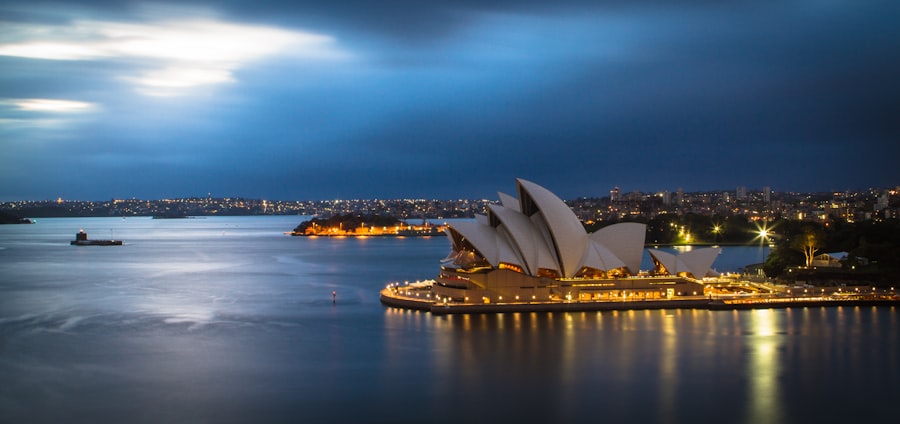
The ocean in four clusters.
Borders are political; trade winds, current systems and reef structures are not. We group Oceania the way navigators did — by latitude, by season, by canoe distance to the next horizon.
01. Australasia.
Australia and New Zealand. Twenty-six million people in two countries that combined are larger than Europe. Australasia is the temperate-zone anchor of the region — the hotels-and-rental-cars side of Oceania, where you self-drive a thousand kilometres and never lose phone signal. The continent (Australia) and the islands (Aotearoa) are wildly different countries; treat them as two trips.
- The east coast (Australia). Sydney to Cairns by plane and rental car. Three weeks, three reef days, two desert nights at Uluru. Bondi to Byron, Brisbane Sunday market, the Whitsundays' sail trip — and the Great Barrier Reef from Cairns or Port Douglas. Drive on the left; visa via the ETA system.
- South Island (New Zealand). Christchurch to Queenstown by self-drive — Lake Tekapo at dawn, Mt Cook lookout, the Milford Sound flight, then the Catlins coast back. Two weeks rewards more than ten days. Cars are inexpensive, roads are quiet, the scenery does the work.
- Tasmania (Australia). The under-told Australian state. Cradle Mountain, MONA museum in Hobart, Bay of Fires beaches, Bruny Island oysters. Drive yourself; book the Spirit of Tasmania ferry from Melbourne if you fancy a slow start.
02. Melanesia.
Fiji, Papua New Guinea, Vanuatu, Solomon Islands, New Caledonia. The continental fragments of the southwest Pacific — high islands, dense forest, deep cultural diversity. Eight hundred languages in PNG alone. Best between May and October (the dry season); cyclone season runs November to April and is non-negotiable.
- Yasawa island-hop (Fiji). The gentlest first Pacific trip. Bula Pass on the Yasawa Flyer ferry; bungalow on three different islands across a week. Coral is back from the 2016 cyclone; sunsets are unchanged. Indo-Fijian curries on the mainland are the meal of the trip.
- Mt Yasur and Pentecost (Vanuatu). Walk to the rim of an active volcano on Tanna; sleep at a beachfront village and listen for the rumble. April–May the Pentecost Naghol land-divers jump from sixty-foot towers with vines tied to their ankles — the original bungee. Air Vanuatu domestic flights connect everything.
- Sepik river (Papua New Guinea). Five days in a dugout canoe, sleeping in stilt-house villages, watching crocodile-skin scarification ceremonies. PNG is guided travel only; book through a specialist (Trans Niugini Tours, MV Sepik Spirit). The cultural depth is unmatched.
03. Polynesia.
Samoa, Tonga, Cook Islands, French Polynesia, Niue, Tuvalu, Tokelau, Wallis-Futuna. The triangle from Hawaii to New Zealand to Easter Island, expanded eastward by Polynesian wayfinders a thousand years before Cook. Soft sand, lagoons, the easiest weather window in the region. May to October is dry and cool; trade winds tip November to April (cyclone window).
- Bora Bora plus Moorea (French Polynesia). The honeymoon trip every Pacific brochure has been selling for thirty years. Overwater villa in Bora Bora, twin-bay catamaran day from Moorea, market morning in Papeete on the way out. Air Tahiti pass; ten days minimum.
- Aitutaki lagoon (Cook Islands). The lagoon that beats Bora Bora's, in a country that costs a third as much. One Foot Island, Maina motu, the One Foot Island stamp. Fly via Auckland; New Zealand dollar pricing; English everywhere.
- Vavaʻu humpbacks (Tonga). One of three places on Earth where snorkellers legally enter the water with humpback whales. July to October only; licensed operators only; book six months out. The last Polynesian kingdom is itself a quiet, royal-flag-flying surprise.
04. Micronesia.
Palau, Federated States of Micronesia (Yap, Chuuk, Pohnpei, Kosrae), Marshall Islands, Kiribati, Nauru. The northern Pacific — atolls, lagoons, the most far-flung travel in Oceania. Flights are infrequent (United Island Hopper from Honolulu is the famous one) and the dive sites are world-class. Best November through April (north of the equator, the calendar inverts).
- Rock Islands (Palau). Kayak between mushroom-shaped limestone islets; snorkel Jellyfish Lake's stingless population; certified divers do Blue Corner. The Pristine Paradise Pledge is stamped into your passport on arrival — environmental tourism done right.
- Chuuk Lagoon ghost fleet (FSM). Sixty Japanese WWII shipwrecks on a sandy lagoon floor at sport-diver depth. PADI Open Water minimum; advanced for the deeper hulls. Truk Stop and Blue Lagoon resorts are the dive bases. Three days inside the lagoon, two on Pohnpei or Yap on the way.
- Yap stone money (FSM). Pre-money stone discs the size of dining tables, still in use as ceremonial currency on the village trails. Manta rays glide over the cleaning stations of Mil Channel January–April. Old Pacific in the slow lane.
When to go — wet vs dry.
Oceania runs on cyclones, not on rain. Two seasons across the region, sitting at opposite ends of the calendar depending on whether you are in the southern Pacific, the antipodes, or Micronesia. Here is the year, region by region — peak (P), shoulder (S), low (L), festival (F).
- Australia (south + east). Peak Oct–Apr (Australian summer). Shoulder May, Sep. Low Jun–Aug (cool Sydney winter; tropical north flips to its dry-season peak).
- New Zealand. Peak Dec–Mar. Shoulder Oct–Nov, Apr. Low Jun–Aug (skiing OK; touring not).
- Melanesia (Fiji, Vanuatu, Solomons). Peak May–Oct (dry). Shoulder Nov, Apr. Low Dec–Mar (cyclone window — do not plan an island holiday inside it).
- Polynesia (Samoa, Tonga, Cooks, French Polynesia). Peak May–Oct. Shoulder Nov, Apr. Low Dec–Mar (cyclone). Whale season Tonga: Jul–Oct.
- Micronesia (Palau, FSM). Peak Nov–Apr (north-of-equator dry). Shoulder May, Oct. Low Jun–Sep (typhoon and rain).
The southern Pacific inverts the northern calendar.
May through October is the only honest window for Fiji, Tonga, Samoa, Vanuatu, Cook Islands, French Polynesia. November through April is cyclone season — flights divert, resorts close, insurance gets specific. Plan the inverse of your hemisphere instinct. Hotel rates double in July and August — Australian and Kiwi school holidays are the regional peak.
Micronesia inverts again.
Palau, Yap, Chuuk and Pohnpei sit north of the equator and run on the typhoon calendar — November through April is the dry, settled season; June through September brings rain and the Pacific typhoon belt. Whale shark season in Palau is December and January.
Whale season is its own calendar.
Humpback whales migrate from Antarctic feeding grounds to Polynesian breeding grounds June through October. Tonga's Vavaʻu group is the headline; French Polynesia's Rurutu and Niue's caves are the smaller alternatives. Book six months out — the licensed boats sell out and the season is short.
Four itineraries worth stealing.
The plans we'd send to a friend, road-tested and updated each autumn. Click for day-by-day. The full library lives at /en/plan/itineraries/oceania.
14 days — Australia East Coast, Sydney to Cairns to Uluru.
The honest first Australia trip. Sydney harbours, the Whitsundays sail, the Reef from Port Douglas, then a flight to the red centre. Cost tier $$$. Built by Iris, October 2025.
- Sydney — 4 nights. Bondi to Manly walk, harbour ferry, Opera House show, Blue Mountains day-trip.
- Whitsundays (Airlie Beach) — 3 nights. Two-night sail aboard a tall ship; one night ashore.
- Port Douglas — 4 nights. Reef day, Daintree rainforest, Mossman Gorge, Cape Tribulation drive.
- Uluru / Kata Tjuta — 3 nights. Sunrise base walk, Field of Light dinner, sunset at Uluru.
12 days — New Zealand grand tour, North to South Island.
The two-island self-drive. Auckland in, Queenstown out. Cost tier $$. Built by Layla, March 2025.
- Auckland — 2 nights. Waiheke Island wineries, Devonport ferry, Karekare beach.
- Rotorua + Tongariro — 3 nights. Te Puia geyser, Tongariro Alpine Crossing day-walk, hot pools at night.
- Wellington — 1 night. Te Papa, the Cuba Street wind, Interislander ferry south.
- Kaikōura + Christchurch — 2 nights. Whale-watch boat, drive into the Canterbury Plains.
- Tekapo + Mt Cook — 2 nights. Aoraki sunrise, dark sky reserve, Hooker Valley walk.
- Queenstown + Milford Sound — 2 nights. Milford flight, Glenorchy drive, last meal at Fergburger.
10 days — Fiji plus Tonga, Yasawa to Vavaʻu.
The classic Pacific double — gentle first chapter in Fiji, then humpback whales in Tonga (July to October only). Cost tier $$. Built by Marama, August 2025.
- Nadi + Yasawas — 5 nights. Two beach huts on two different islands; Bula Pass ferry between.
- Suva transit — 1 night. Curfew at the Grand Pacific, then onward flight to Tonga.
- Vavaʻu — 4 nights. Three days on the licensed whale-swim boats; one day at Swallows Cave.
14 days — French Polynesia island-hop, Tahiti to Bora Bora.
The honeymoon trip every Pacific brochure has been selling for three decades — built right. Cost tier $$$$. Built by Marcus, May 2025.
- Tahiti — 2 nights. Papeete market dawn, Le Roulottes dinner, Faarumai waterfall.
- Moorea — 4 nights. Belvedere lookout, Cook's Bay snorkel, drum-circle dinner.
- Huahine — 2 nights. The under-the-radar middle island. Vanilla farm, archaeological sites.
- Bora Bora — 4 nights. Overwater bungalow, Mt Otemanu, lagoon-tour with motu picnic.
- Tahiti — 2 nights. Last market morning, Black Pearl Museum, the long flight home.
Three more, by tag.
- 21 days, Australia grand circumnavigation. Sydney, Tasmania, the Red Centre, the Kimberley, Perth, the Great Ocean Road back. Built by Iris, January 2026.
- 10 days, Cook Islands plus Aitutaki. Rarotonga ring road, three nights on Aitutaki's lagoon, the Sunday Punanga Nui market. Built by Marama, October 2025.
- 14 days, Palau plus Yap. Rock Islands, Jellyfish Lake, Mil Channel manta rays, Yap stone money trails. Built by Marcus, February 2026.
Food and drink, country by country.
One immutable rule per kitchen. Order this, drink that, never make the obvious mistake.
- Australia — Coffee is religion. The flat white was invented here (or in Auckland, depending who you ask) and a third-wave roastery sits on every Melbourne lane and Sydney corner. Skip Starbucks; it does not exist for a reason. Pair: flat white with a meat pie from the corner bakery.
- New Zealand — Hāngī is the feast. Lamb, kūmara, chicken, pork buried with hot stones in an earth oven for three hours; smoke seeps into the meat. Visit a marae with a Māori host, eat with the family, never as a tourist photo. Pair: hāngī with a Marlborough Sauvignon Blanc.
- Fiji — The lovo is the village welcome. Underground stone oven; taro, fish, palusami (corned beef in coconut cream and taro leaves). Eat seated on woven mats, with the village. Decline kava three times to be polite; accept the fourth bowl. Pair: lovo with kava (yaqona) clapped into the bowl.
- Polynesia — Poisson cru is the daily lunch. Raw tuna marinated in lime juice and coconut milk with cucumber, tomato, spring onion. Tahiti's national dish, served at every roulotte and market stall. Pair: poisson cru with Hinano lager, ice-cold.
- Samoa — Sunday umu is the family meal. Whole island closes; oven of stones; taro, palusami, suckling pig. After church only. The hospitality is the meal — accept the invitation. Pair: umu with koko Samoa (cocoa-bean drink).
- Indo-Fijian — Goat curry on Saturday. Indentured Indian labour brought masala dosa, roti, curries to Fiji a century ago and the cuisine is now a category of its own. Suva's Holiday Inn buffet is the easy entry; Saweni Beach roti shops are the deep dive. Pair: goat curry with a sweet lassi.
Long-haul flights, island ferries, four-wheel drives.
Oceania moves on Air New Zealand, Qantas, Fiji Airways, Air Tahiti and a hundred small Pasifika carriers. There are almost no trains — Australia and New Zealand have a couple of overland routes, the rest of the region has none. Plan accordingly. Air New Zealand and Qantas run hub-and-spoke schedules from Auckland and Sydney that make a one-stop the cheapest way to combine two countries. Fiji Airways uses Nadi as a hub; Air Tahiti's Tahiti Iti pass is the only sane way to island-hop French Polynesia. Self-drive is excellent in Australia, New Zealand and Tasmania; functional in Fiji's Viti Levu, Samoa's Upolu, the Cook Islands' Rarotonga; everywhere else you accept the schedule the local airline gives you. Inter-Pacific is expensive; book months ahead.
Door-to-door comparison.
- Sydney to Melbourne — XPT train 11h, plane 1h 30m. Plane wins.
- Auckland to Wellington — Northern Explorer train 11h (scenic), plane 1h 5m. Take the train at least once.
- Christchurch to Greymouth — TranzAlpine train 4h 45m (one of the world's great rail journeys).
- Nadi to Suva — bus 4h, plane 35m. Take the bus once.
- Rarotonga to Aitutaki — Air Rarotonga 50 min. No alternative.
- Tahiti to Bora Bora — Air Tahiti 50 min. No ferry.
Six routes worth knowing.
- Sydney SYD to Cairns CNS — 3h 0m by Qantas, Virgin, Jetstar.
- Auckland AKL to Queenstown ZQN — 2h 0m by Air New Zealand or Jetstar.
- Nadi NAN to Apia APW — 3h 30m by Fiji Airways three times a week.
- Tahiti PPT to Bora Bora BOB — 50m by Air Tahiti, multiple daily.
- Honolulu HNL to Majuro MAJ — United Island Hopper 14h with five stops.
- Sydney SYD to Hobart HBA — 1h 50m by Qantas, Jetstar, Virgin.
Three Pacifics, three budgets.
The region doesn't share a price list. Fiji and Samoa run a budget tier; Australia and New Zealand sit comfortably mid-tier; French Polynesia and Palau bill in honeymoon dollars. Plan for the actual destination you're visiting, not a regional average.
Bure tier (Fiji / Samoa / Tonga / Vanuatu) — $90 a day. Beach huts, village homestays, market food.
Bed $30 to $80. Food $15 to $25. Transit $10 to $20. Activities $10 to $25. Realistic across Fiji, Samoa, Tonga, Vanuatu, the Cook Islands' Rarotonga shoulder. Beach huts (bures, fales, falas) on the village beaches are often cheaper than international hostels and three times as nice. Lunch in a Suva roti shop is three dollars; kava in any village is free if you bring the bunch of yaqona root.
Australasia (Australia / New Zealand) — $290 a day. Mid-range hotels, rental cars, restaurants.
Bed $160 to $260. Food $55 to $90. Rental car + fuel $60 to $90. Activities $30 to $80. The middle tier where Australia and New Zealand live. Strong design hospitality, world-class wine lists, English-only. The unavoidable tier for a Sydney plus Reef plus Uluru trip; cheaper than a Bora Bora honeymoon, more expensive than a Bali fortnight. AirBnB is well-priced outside the cities; rental cars get expensive in the school holidays.
Editorial Pacific (French Polynesia / Palau) — $1,400 a day. Overwater villas, dive boats, Aranui freighter cabins.
Bed $900 to $1,800. Food and drinks $150 to $300. Inter-island flights $200 to $400. Lagoon tour or dive day $200 to $400. Bora Bora and Palau price in honeymoon dollars. Worth it for three or four nights; pair with cheaper islands (Moorea, Yap) for ballast. Four Seasons Bora Bora, Pacific Resort Aitutaki, Palau Pacific Resort — three nights total, not seven.
Four phrases per dialect.
Pacific languages are not dialects of each other — Samoan, Tongan, Māori and Tahitian descend from a common ancestor a thousand years ago and have drifted since. The four words that move every meal forward, in the eight languages you're most likely to need. Try them; locals notice immediately.
- English · Australian. G'day (hello). Cheers (thanks / cheers / goodbye). No worries (it's all good). Reckon (think / suppose).
- Te Reo Māori · New Zealand. Kia ora (hello / thanks / be well). Ka pai (well done / good). Kai (food). Whānau (family).
- Fijian · iTaukei. Bula (hello / life / cheers). Vinaka (thank you). Sega na leqa (no problem). Yaqona (kava ceremony).
- Samoan · Gagana Sāmoa. Talofa (hello). Faʻafetai (thank you). Maʻalo (well done). ʻAi (food / eat).
- Tongan · Lea Faka-Tonga. Mālō e lelei (hello). Mālō ʻaupito (thank you very much). Sai pē (it's fine). Toki sio (see you later).
- Tahitian · Reo Tahiti. ʻIa orana (hello). Māuruuru roa (thank you very much). Nānā (goodbye). Mānuia (cheers / blessings).
- Cook Islands Māori · Reo Māori Kūki ʻĀirani. Kia orana (hello / live long). Meitaki (thank you). Aere rā (goodbye). ʻIma (yes).
- Bislama · Vanuatu / Solomons pidgin. Halo (hello). Tankyu tumas (thank you very much). Mi laekem (I like it). Hao yu stap (how are you).
Festivals worth a detour.
Six dates that bend an itinerary. Book early; some sell out a year ahead, and the inter-island flights book up faster than the events.
- Pasifika Festival — Auckland, March. The largest Polynesian festival on Earth — eleven island villages over three days at Western Springs, free entry, family meals on the grass. The best one-stop introduction to the cultures you are about to visit. Five stars.
- Pentecost Land Diving — Vanuatu, April–May. The original bungee. Men jump from sixty-foot wooden towers with vines tied to their ankles in a fertility rite that predates contact. Two villages on Pentecost run it most Saturdays April through June. Five stars.
- Heiva i Tahiti — French Polynesia, July. Three weeks of dance, sport, and tattoo competitions across Papeete and Moorea. Outrigger canoe sprints, ʻori Tahiti dance finals, the most spectacular feathered costumes on Earth. Book Bora Bora outside the festival or stay six weeks. Five stars.
- Sydney Mardi Gras — Australia, March. The largest LGBTQ+ event in the southern hemisphere. Saturday night parade down Oxford Street; thirty thousand marchers, three hundred thousand spectators. Bondi pre-parties from Tuesday. Four stars.
- Tonga Whale Festival — Vavaʻu, August. Three weeks of the licensed whale-swim season at its peak. The town turns into a research-and-tourism hub. Seven stars if you swim with a humpback calf, which is the point.
- Hibiscus Festival — Suva, August. Fiji's national week-long carnival. Float parade, beauty pageant, kava sessions in every park. Indo-Fijian sweets and roti stalls every block. The most local festival on the trip. Four stars.
Six anchorages we trust.
Stay here. Eat here. Walk for two days before you do anything else.
- Surry Hills — Sydney. The original Sydney inner-east terrace neighbourhood, ten minutes' walk to Hyde Park, twenty to Bondi by bus. Coffee on every corner; Reuben Hills, Single O. Stay here, never the CBD. Why: cafés, walkable.
- Ponsonby — Auckland. The Auckland equivalent of Surry Hills. Villas, rooftops, Saturday market, a bus to the harbour bridge. Three Lamps for breakfast; SPQR for lunch; Cocoro for dinner. Why: villas, restaurants.
- Tamarii Quarter — Papeete. The market quarter of central Papeete. Stay near Place Vaiete; eat the roulottes (food trucks) at sunset; market mornings before 06:00 are the day's best meal. Why: market, roulottes.
- Vuda Marina — Fiji. Between Nadi and Lautoka. Sailboats and cruisers stop here on the way to the Yasawas; stay in a beachfront bure five minutes from the airport. The sunset bar is the best reason to be in Fiji. Why: marina, sunset.
- Vavaʻu Town (Neiafu) — Tonga. The whale-swim town on the calm side of the Vavaʻu group. Mango Café for the morning, Bounty Bar for the night, Mariner's Café for the planning. Walk between everything. Why: whales, walkable.
- Matira Beach — Bora Bora. The only public beach on Bora Bora's main motu. Stay here, not on the resort motus, if you want to feel the country and not the brochure. Snack Matira for the lunch poisson cru; sunset cocktails on the sand. Why: public beach, lagoon.
Pack for sun, salt, and rain.
The Pacific runs hot, humid, and surprisingly wet. Trade the cold-weather kit for two reef-safe SPF tubes you actually trust — they'll work in lagoons, on village walks, and through the brief afternoon rain showers.
Sun, salt, lagoons — reef-safe, dry-fast.
- Two reef-safe SPF 50+ sunscreens (Hawaii-legal formula) — many islands ban oxybenzone outright.
- Quick-dry rashguard / UPF 50 long-sleeve top.
- Lightweight linen shirt for village visits and church (modest dress is required in Samoa, Fiji, Tonga).
- Reef shoes for coral and lava beaches.
- Two swimsuits (one always wet).
- Wide-brim hat — equatorial sun is brutal.
- Polarised sunglasses (lagoon glare strips a bare eye).
- Tip — earth tones and pale blues. Avoid floral resort prints; locals laugh politely.
Bags and tech — soft duffel first.
- Soft duffel — small inter-island planes weigh checked bags strictly (12kg–20kg).
- Daypack with a 1.5L bladder for reef walks and rainforest.
- Universal Type-A / I / G adapter (Australia and NZ use Type I; Fiji uses Type I too).
- Power bank 10,000 mAh — outer-island power often runs only at night.
- Dry bag (5L) for boat transfers and lagoon snorkels.
- Headlamp (red filter for star-gazing).
- Cash in USD or AUD for outer islands — ATMs do not exist on most motus.
- Tip — bring twice the cash you think; outer-island ATMs run dry on Wednesdays.
Health and admin — don't get sick.
- Travel insurance with cyclone cover (mandatory if travelling November to April).
- Photocopies of passport, ETA / NZeTA, vaccination card.
- Strong DEET 30%+ for Vanuatu, Solomons, PNG (dengue risk).
- Anti-malarials if visiting PNG, Solomons, or rural Vanuatu — speak to a travel doctor.
- Reef-cut antibiotic ointment (coral cuts infect fast).
- Modesty wrap (men and women) for village and church visits.
- International driving permit if planning Australia, NZ, Fiji, or Cook Islands rentals.
- Tip — never drink the tap water on outer islands. Bottled or filtered, every time.
The questions, answered.
The eight questions every reader sends before a first Oceania trip. Updated April 2026.
- When is cyclone season in the South Pacific?
- November through April is the South Pacific cyclone season — Fiji, Tonga, Samoa, Vanuatu, Cook Islands, French Polynesia, the Solomons. The dry season (May through October) is the only sensible window for the islands. Australia's tropical north (Cairns, Darwin, the Kimberley) shares the same calendar — wet from Nov to Apr, dry the rest of the year. Plan around it. Insurance with cyclone cancellation cover is mandatory if you book in shoulder months.
- Do I need a visa for Australia or New Zealand?
- For Australia, US/UK/EU/Canadian passports use the ETA or eVisitor — under AU$25, applied online, three-month stay. For New Zealand, the NZeTA plus IVL is mandatory for visa-waiver passports — about NZ$100 total, applied online before flying. Allow 72 hours for both. Both countries deny entry on arrival without the document — they are not on-arrival visas.
- What about visas for Fiji, French Polynesia and the smaller Pacific nations?
- Most are visa-on-arrival or visa-free for Western passports for stays of 30 to 90 days — Fiji (4 months), Samoa (60 days), Tonga (31 days), Vanuatu (30 days), Cook Islands (31 days), French Polynesia (90 days under Schengen rules). Palau and FSM grant on-arrival entry. Solomon Islands is free for 90 days. Papua New Guinea is the exception — apply for the eVisa in advance. Always check before booking; rules change.
- Can you swim with humpback whales in Tonga and where?
- Yes. The Vavaʻu group of Tonga is one of three places on Earth where snorkellers can legally enter the water with humpback whales (the others are Rurutu in French Polynesia and the Silver Bank, Dominican Republic). Season is July through October. You go on a licensed boat with a permitted operator — the swim is supervised, four guests at a time. Book six months out; the boats fill.
- How do I get between the Pacific islands — flights or ferries?
- Almost entirely by air. Fiji Airways, Air Tahiti, Air New Zealand, Virgin Australia and Qantas run the long-haul. Inter-island within French Polynesia is Air Tahiti (booked island-hop pass before arrival); within Fiji it is Fiji Link or boat transfer; within Samoa and Tonga it is small Pasifika carriers and the occasional ferry. Inter-Pacific flights are expensive and infrequent — book in advance and accept the schedule the airline gives you.
- When is the best time to visit Australia and New Zealand?
- Inverse to the northern hemisphere. Australia and New Zealand are at their best from October through April — Australian summer is December to February (Sydney's beaches, Tasmanian wildflowers), New Zealand's summer is the same window. The South Island is at its absolute peak in February and March. Avoid winter (June to August) for the southeast of either country unless you ski; the tropical north of Australia inverts and is best in the Australian winter.
- Are Pacific Island countries expensive?
- It varies by an order of magnitude. Fiji and Samoa run a budget-friendly tier — homestays from US$40, beach bungalows from US$80, hearty Indo-Fijian meals for US$8. Cook Islands and Tonga are mid-tier. French Polynesia is the most expensive country in Oceania per night — Bora Bora overwater bungalows start at US$1,200 a night and dinner is rarely under US$60. Palau is similarly priced. Plan a Polynesian trip the way you would Maldives, not the way you would Bali.
- Is it safe to travel to Papua New Guinea and the Solomons?
- With a guide and care, yes; on your own and improvising, no. Papua New Guinea has the highest violent-crime rate in the region — Port Moresby and Lae require security advice and a fixer. The Sepik, Tufi, the Highlands sing-sing festivals, Trobriand Islands are reachable on guided trips and well worth it. The Solomons are calmer; Honiara has limits but Marovo Lagoon and the WWII dive sites are well-organised. Both reward serious travellers; neither is a first-time Pacific trip.
End of Issue Nº 17 — Oceania.
HowTo: Travel Edition. Issue Nº 017. Autumn 2026. Published 25 April 2026. Field desk Sydney / Auckland / Suva. 980 contributors strong.
Bula bowl. Whale at sunrise. Reef-safe sunscreen. Soft duffel only. Don't rush the lagoon.