A FIELD GUIDE · 612 GUIDES · 44 COUNTRIES · 1,200 CONTRIBUTORS · ISSUE Nº 14 · SPRING 2026
A field guide to Europe.
612 guides. 44 countries. 1,200 contributors who actually went. An editorial atlas to the slow side, the train side, and the side you only find by walking. Region by region, season by season — the way Europe actually works. Updated 24 April 2026 from the Plan Desk in Lisbon.
- 612 field guides
- 44 countries
- 1,200 contributors
- 9.4 average readability
Quote from the editor: Travel writing should sound like a postcard from someone you trust — not a press release from someone you don't. — Iris Mendoza, Editor at Large.
A letter from the Plan Desk.
By Iris Mendoza, Senior Editor for Europe. Issue Nº 14, Spring 2026.
Europe is small. Which is the secret. Forty-four countries fit in roughly the same square mileage as the United States, and you can sit at three borders before lunch. The temptation is to treat that compactness like a checklist — six countries in two weeks, ten in three. Don't. The Europe worth writing about is the slow one. The one you find by skipping the second city, by getting lost in the first. By taking the train when the flight is shorter, because the train is the trip. By staying long enough that the waiter knows your name. Two cities a week, max. This page is the manual we wished existed when we started — everything we'd send a friend before their first European trip, and a few things only useful on the fifth.
How to use this issue.
Read it like a magazine. Skim the chapter heads, dip into whatever pulls at you. Twelve chapters in order: countries, regions, when to go, itineraries, food, trains, budget, language, festivals, neighborhoods, packing, and the FAQ. The links inside take you to specific guides — 612 of them — for the deep work.
Forty-four countries, sorted honestly.
The continent's countries by how many guides we have, not by GDP or alphabet. Featured below: the country we have written about for the longest. Click any tile for the full sub-atlas — or jump straight to the directory at /en/plan/itineraries/europe.
-
Italy — Roma — 84 guides — 10 to 14 days
The country we have written about for the longest. North to south is four climates, three cuisines, and a thousand small towns nobody's photographed yet. Start with a region, never the whole country.
France — Paris — 67 guides — 7 to 14 days
Bread is the meal. Provence is May–June. South of France is for road trips.
Spain — Madrid — 58 guides — 8 to 12 days
Pintxos beat tapas. Andalucia in shoulder season is the best-value major destination on the continent.
Portugal — Lisboa — 41 guides — 6 to 9 days
Lisbon plus Porto plus the Douro is a perfect first European trip. Add the Alentejo if you have ten days.
Greece — Athens — 38 guides — 8 to 12 days
Mainland and one island. Skip Santorini in July; go to Naxos or Sifnos instead.
Germany — Berlin — 36 guides — 7 to 10 days
Berlin plus Munich plus a third town. Public transport is the best in Europe.
Netherlands — Amsterdam — 22 guides — 3 to 5 days
A long weekend. Rent bikes day one. Maastricht and Utrecht are quieter, prettier, cheaper.
Iceland — Reykjavik — 19 guides — 7 to 10 days
The ring road is a complete trip. Don't try to fit it into less than seven days.
Croatia — Zagreb — 24 guides — 7 to 10 days
Adriatic coast plus one inland day. Avoid Dubrovnik in July; go to Split or Hvar.
Norway — Oslo — 21 guides — 7 to 14 days
Bergen plus Lofoten plus the train in between. June for midnight sun, February for aurora.
Switzerland — Bern — 18 guides — 5 to 8 days
Expensive but worth one visit. Trains are the experience; tickets are not cheap.
Ireland — Dublin — 23 guides — 7 to 10 days
The Wild Atlantic Way is the best signposted itinerary in Europe. Rent a car for the west.
Czechia — Praha — 17 guides — 4 to 6 days
Prague is enough. Add Cesky Krumlov as a day trip. Beer is genuinely the best in Europe.
Austria — Wien — 16 guides — 5 to 8 days
Vienna plus Salzburg plus a lake day. December for Christmas markets, May for everything else.
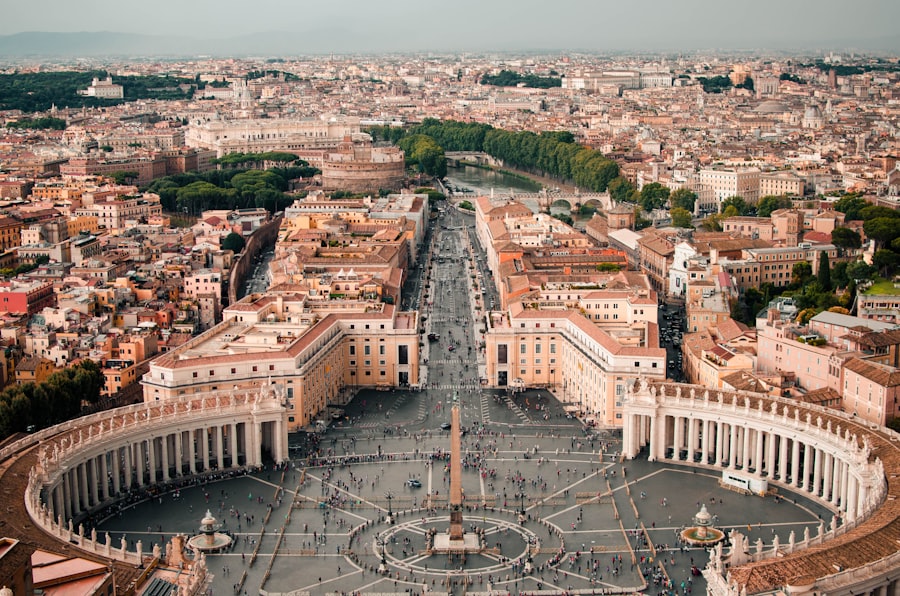
The continent in five clusters.
Borders are political; weather and food are not. We group Europe the way travelers actually move through it — by climate, by season, by table.
01. The Mediterranean.
The southern edge — long lunches, dusty light, the sea always within view. Best between April and June, again in late September.
- Coastal Italy. Liguria, Amalfi, Puglia. Trains run, the water is finally warm, and tomatoes mean it. April to June.
- South of France. Provence to Nice via the Var backroads. Lavender peaks late June. May, June, September.
- Iberian shoulder. Andalucia and the Algarve once the August crush leaves. Rates fall by a third. September, October.
02. The Atlantic Edge.
Wind, surf, raw coast and a lighter palette of food. Iceland, Ireland, Portugal, Galicia, Brittany.
- Iceland Ring. The full ring road in 9 days; the south coast in 4 if you only have one week. May, June, July.
- West Ireland. Cork to Donegal slowly. The Wild Atlantic Way is the only signposted itinerary we trust. May, September.
- Lisbon to Galicia. Trains and ferries up the Atlantic — Porto, Vigo, Santiago, A Coruna. April to October shoulders.
03. Central Europe.
Beer halls, river valleys, Christmas markets and the fastest trains on the continent.
- DACH triangle. Munich, Salzburg, Prague — three nights each, sleeper train between two of them. September, October, December.
- The slower middle. Budapest, Bratislava, Krakow. Cheaper than Vienna by about 35 percent. April, May, September.
- Christmas market loop. Strasbourg, Nuremberg, Vienna, Zurich. 10 days, four cities, a lot of gluhwein. December.
04. The Nordics.
Long days in summer, very long nights in winter. Sauna culture, design culture, and food that finally caught up.
- Midnight sun loop. Bergen, Lofoten, Tromso. Late June to mid-July is the sweet spot.
- Lapland in winter. Rovaniemi, Inari, Abisko. Aurora odds peak at the spring equinox. February, March.
- City weekends. Copenhagen plus Malmo, or Stockholm archipelago — three nights each. May, September.
05. The Balkans.
Cheaper, less crowded, and on a bigger trajectory than anywhere else on the continent.
- Adriatic Coast. Zadar to Kotor by ferry and bus. Stays under 70 euros a night still possible. May, June, September.
- Inland triangle. Tirana, Ohrid, Thessaloniki. Three countries in 10 days, slow. April, October.
- Belgrade plus Sarajevo. Two cities, one train through Mokra Gora. Heavy in the best way. September.
When to go — a real calendar.
Shoulder season isn't a single month, and it isn't the same in Croatia as in Iceland. Here is the year, region by region — peak (P), shoulder (S), low (L), festival (F).
- Mediterranean. Peak Jun–Aug. Shoulder Mar–May, Sep–Oct. Low Nov–Feb. Festival pulses across the summer.
- Atlantic Edge. Peak Jul–Aug. Shoulder May, Sep. Long low Nov–Apr. Iceland is its own calendar.
- Central. Peak Jun–Aug. Shoulder Apr–May, Sep. Festival December for markets.
- Nordics. Peak Jun–Aug. Festival Feb–Mar (aurora). Shoulder May, Sep. Closed-feeling Nov.
- Balkans. Peak Jun–Aug. Shoulder May, Sep. Long low Nov–Mar.
April is the new June.
Rates haven't moved, the light is the same, and you'll fit on a train. The trade-off is occasional rain — pack one extra layer and accept it. 3 to 5 degrees cooler. 60 percent the crowds.
August is for locals.
Italians close their cities and head to the coast. Avoid Rome and Florence, follow the Italians to the smaller seaside towns instead. Skip cities. Go coastal.
Late September is the secret.
Warm enough to swim, late enough to fit on a train, and the food is at its best — vendemmia and porcini both peak now. 18 to 24 degrees Celsius. Wine harvest.
Six itineraries worth stealing.
The plans we'd send to a friend, road-tested and updated each spring. Click for day-by-day. The full library lives at /en/plan/itineraries/europe.
10 days — Tuscany at the speed of dinner.
A loop of three towns and one valley. Trains in, car for two days, trains out. Slow and wine. Cost tier $$$. Built by Eli, September 2025.
- Florence — 3 nights. Land late, Trippa near San Lorenzo, walk the Arno at dawn.
- San Gimignano — 1 night. Hilltop towers, nothing else, that's the point.
- Montalcino — 2 nights. Brunello, the four-hour lunch, the empty road back.
- Pienza — 2 nights. Cheese, light, pecorino paired with chestnut honey.
- Florence return — 2 nights. Last dinner, last gelato, last walk to the Ponte.
14 days — Lisbon to Berlin, no flights.
The big one. Atlantic to capital, by sleeper train where it makes sense. Trains only. Cost tier $$. Built by Marcus, May 2025.
- Lisbon — 3 nights. Bairro Alto, fado, the Tagus at sunset.
- Madrid — 2 nights. Mercado de San Miguel, a long lunch in La Latina.
- Barcelona — 2 nights. Skip Sagrada queue, walk Gracia at dusk.
- Paris — 3 nights. Bakery in the morning, dinner near Pigalle.
- Berlin — 4 nights. Kreuzberg, Tempelhof, dinner at Markthalle Neun.
7 days — Paris and the south, one rail card.
If you only have a week and you want it to feel like Europe, this. First trip. Cost tier $$. Built by Iris, April 2025.
- Paris — 3 nights. Marais walking, cafe mornings, the second arrondissement for dinner.
- Avignon — 1 night. Palace of the Popes, dinner under plane trees.
- Marseille — 2 nights. Vallon des Auffes, bouillabaisse at Chez Fonfon.
- Nice — 1 night. Old town, socca, the train to the airport.
Three more, by tag.
- 14 days, Norway slow. Bergen, Flam, Lofoten — fjords by ferry. Built by Lucia, June 2025.
- 10 days, Greek mainland. Athens, Meteora, Nafplio — no islands required. Built by Zoe, May 2025.
- 9 days, Iceland ring. Reykjavik, south coast, east fjords, north loop. Built by Marcus, August 2025.
Food and drink, country by country.
One immutable rule per country. Order this, drink that, never make the obvious mistake.
- Italia — Pasta is regional. Don't order carbonara north of Rome or pesto outside Liguria. Match the dish to the latitude. Pair: cacio e pepe with a tre colline 2019.
- France — Bread is the meal. A slow morning at a real bakery is half the trip. Pain de campagne, butter, jam. Pair: tartine with Earl Grey.
- Espana — Pintxos beat tapas. Basque country wins. Stand at the bar, point, count toothpicks at the end. Pair: gilda with txakoli.
- Portugal — Pasteis are breakfast. The custard ones, eaten warm, near 11. One is never enough. Pair: pastel de nata with a bica.
- Hellas — Eat outside. The taverna, the courtyard, the rocks — Greek food belongs in air. Pair: saganaki with retsina.
- Deutschland — Bakeries open early. Brot, butter, salami at 7am. The day starts savory. Pair: brotchen with filterkaffee.
Trains, almost always, not planes.
Door-to-door beats wing-to-wing. The plane saves 90 minutes in the air and loses 3 hours to security, transfer, and the airport-to-city drag. The train deposits you in the middle of where you wanted to be. Buy 60 plus days out for advance fares. Use Trainline for a single-ticket experience, or each rail operator's site for the cheapest seats. Eurail passes only pencil out for trips with 6 or more legs in 14 days — otherwise point-to-point wins.
Door-to-door comparison.
- Paris to London — train 2h 16m, plane 1h 25m (plus 3h logistics).
- Paris to Amsterdam — train 3h 19m, plane 1h 25m.
- Madrid to Barcelona — train 2h 30m, plane 1h 20m.
- Munich to Berlin — train 3h 58m, plane 1h 10m.
- Vienna to Zurich — train 7h 56m (sleeper option), plane 1h 35m.
Six routes worth knowing.
- Paris GAR to Amsterdam AMS — 3h 19m, 20 trains/day.
- Madrid ATO to Barcelona BCN — 2h 30m, 32 trains/day.
- Roma TRM to Firenze SMN — 1h 32m, 30 trains/day.
- Munchen HBF to Wien HBF — 4h 02m, 10 trains/day.
- Lisboa OR to Porto CMP — 2h 50m, 18 trains/day.
- Berlin HBF to Praha HLN — 4h 24m, 8 trains/day.
Three budgets, three trips.
What 70, 180, and 420 euros a day actually buys in 2026. Country-adjusted notes inside each tier.
Frugal — 70 euros a day. Hostel, market, second-class.
Bed 18 to 34 euros. Food 18 to 25 euros. Transit 8 to 14 euros. Sights 10 euros. Realistic in Portugal, the Balkans, Central Europe; tight in France and Switzerland.
Comfort — 180 euros a day. Three-star, one nice meal a day.
Bed 85 to 140 euros. Food 45 to 65 euros. Transit 20 to 30 euros. Sights 20 euros. The honest middle — not backpacker, not honeymoon. Where most readers actually spend.
Editorial — 420 euros a day. Boutique, sleeper trains, one Michelin.
Bed 220 to 360 euros. Food 90 to 150 euros. Transit 40 to 70 euros. Sights 30 euros. Doable everywhere but doubles fast in Switzerland, Iceland and London. Plan the splurge dinner first.
Five phrases per country.
The four words that move every meal forward, and the one that opens every door. Try them; locals notice.
- France. Bonjour. Merci. L'addition, s'il vous plait. Une carafe d'eau (tap water — free).
- Italia. Buongiorno. Grazie. Il conto, per favore. Un caffe (espresso — never a 'coffee').
- Espana. Hola, buenos dias. Gracias. La cuenta, por favor. Una cana (small draft beer).
- Deutschland. Guten Tag. Danke. Die Rechnung, bitte. Ein Wasser, bitte (tap water — ask).
- Portugal. Ola, bom dia. Obrigado / Obrigada. A conta, por favor. Uma bica (espresso, Lisbon).
- Hellas. Yeia sas. Efcharisto. Ton logariasmo. Ena ouzo.
- Nederland. Hallo. Dank u wel. De rekening, alstublieft. Een biertje.
- Hrvatska. Dobar dan. Hvala. Racun, molim. Jedna rakija.
Festivals worth a detour.
Six dates that bend an itinerary. Book early; some sell out a year ahead.
- Las Fallas — Valencia, March. A week of fire, satire, and papier-mache monuments that meet a torch on the last night. Five stars.
- Feria de Abril — Sevilla, April. A second week dedicated to dressing well, eating outside, and dancing until 5. Four stars.
- Cannes Film Festival — May. Public side events are accessible — the beach screenings are free and the line is just patience. Four stars.
- Il Palio — Siena, July. Ninety seconds of medieval. Twice a summer the city pauses for a horse race that has been the same since 1644. Five stars.
- La Tomatina — Bunol, August. An hour of tomatoes. Buy goggles, abandon dignity. Three stars.
- Christkindlmarkt — Vienna, December. Markets, gluhwein, choirs. Stephansplatz first, Schonbrunn for the strange tourist photos, Spittelberg for the locals. Four stars.
Six neighborhoods we trust.
Stay here. Eat here. Walk for two days before you do anything else.
- Trastevere — Roma. The pre-tourist quarter that still works for residents. Eat where the doors are unmarked. Why: residential, lunch hours.
- Le Marais — Paris. Slowest in the morning, sharpest in the late afternoon. Falafel queue at L'As is 30 minutes — worth it. Why: walkable, cafes.
- Principe Real — Lisboa. A square, four bookstores, and the city's best concept stores. Skip Bairro Alto for this. Why: independent, bookshops.
- Gracia — Barcelona. Where Catalans actually live. Placas, vermouth at 1pm, and quieter than Eixample on every metric. Why: local, placas.
- Kreuzberg — Berlin. The version of Berlin that hasn't been gentrified into oblivion yet. Late dinners, bars open at 4pm. Why: late, diverse.
- Cais do Sodre — Lisboa. The harbor end of the city — pink street is overrated, but the new market is where people actually go. Why: late, riverside.
What to pack for three seasons.
The packing list that fits in a 40L carry-on, in any season except deep winter. Trade two pairs of jeans for one pair you actually like.
Clothing — three seasons, one bag.
- Light merino base layer.
- One linen shirt that takes a wrinkle well.
- One pair of dark trousers, one of jeans.
- One sweater for surprise nights.
- Trail-ready sneakers (not running shoes).
- A jacket that handles 40 minutes of rain.
- Two pairs of swim — one for each city.
- Tip: pack one extra layer than you think you need.
Bags and tech — trains take small bags.
- One 40L carry-on backpack — fits all major airlines.
- Or one roll-on under 55 by 40 by 20 cm.
- Universal Type-C / F plug adapter.
- Slim chargers (one fast, one slow).
- Reusable bottle (most stations have free fill).
- Compression cubes — three small, never one big.
- Silk sleep mask (sleeper trains, hostel dorms).
- Tip: name your bag so it shows up on luggage tags.
What to leave home — the 'just in case' pile.
- More than two pairs of shoes.
- Hairdryers (every hotel has one).
- Half-empty toiletries (buy fresh in country).
- More than one 'nice outfit'.
- Anything you'd cry about losing.
- Tip: leave 20 percent of the bag empty for what you'll bring back.
The questions, answered.
The eight questions every reader sends before a first European trip. Updated April 2026.
- When is the actual best time to go to Europe?
- Late April through mid-June and again from late August through early October. The shoulders get you the same temperatures as peak summer with about 60 percent of the crowds and 70 percent of the prices. Avoid August — most of southern Europe is on vacation, and the cities you actually want to visit are half-empty of locals.
- Schengen, the 90/180 rule — what do I actually need to know?
- If you're on a US, Canadian, Australian, or UK passport, you can stay 90 days inside Schengen across any rolling 180-day window. Ireland and most of the Balkans don't count toward Schengen, so a quick week in Dublin or Belgrade can extend a trip without a visa. The new ETIAS system was delayed again — late 2026 at earliest.
- Are trains actually cheaper than flying?
- On routes under 5 hours, almost always. Even when the ticket isn't cheaper, you save the airport hour, the bag fees, the transfer cost, and the morning. Buy 60 plus days out for the best prices on TGV, Frecciarossa, ICE, and AVE.
- What about pickpockets — should I be worried?
- On a few specific blocks: outside Sagrada Familia, inside Roma Termini, on the Paris Metro line 1. Treat your phone like cash, use a front pocket, and don't put your bag down at outdoor cafes. Awareness, not anxiety.
- Can I use US dollars or do I need to exchange currency?
- No, and don't try. Use a debit card with no foreign-transaction fees and pull cash from a bank ATM on arrival — never the airport ones, never DCC ('your home currency') options. Take 100 euros in small bills the first time and you're set.
- How much is enough time for Europe?
- Two cities a week is the rule. 10 to 14 days for one country, 14 to 21 days for two adjacent countries, three weeks for any rail-anchored multi-country trip. Less than a week and you've paid for a long lunch with jet lag.
- Is renting a car worth it?
- Almost never in cities — parking and ZTL fines will eat the savings. Worth it for the Italian countryside, the Highlands, Provence backroads, the Iceland ring road. Otherwise: trains. Always trains.
- What about food allergies and dietary restrictions?
- Western Europe handles vegetarian and gluten-free fluently; vegan options are now standard in any city of 200k+. The hardest country is still Spain (jamon is in everything you don't expect). Italy is excellent for celiac thanks to a national screening program.
End of Issue Nº 14 — Europe.
HowTo: Travel Edition. Issue Nº 014. Spring 2026. Published 24 April 2026. Field desk Lisbon. 1,200 contributors strong.
Slow trains. Long lunches. Quiet shoulders. Borders, sometimes. Two cities a week. Don't rush the south.