The road is the famous part. It is also the worst seat on the coast: one lane each way, a bus in front of you, and the view on the side you can't look at because you're driving.
People rent the car because the photographs are taken from the road. Then they spend the week doing the two things the photographs leave out — waiting behind a coach on a bend, and looking for somewhere to leave the thing.
The Amalfi Coast is about fifty kilometres of cliff with a dozen towns pinned to it. Nearly all of them face the water, and they were reached by water long before the road was cut. That is still the logic of the place. The car is the newcomer, and it shows.
What the car actually costs
Not the rental. The rental is the cheap part. These are the costs, and none of them appear on the booking page.
With a car
- The road. One lane each way, cut into the cliff. When a bus meets a bus, everybody waits.
- Parking. Scarce in every town and priced like it. In the small ones it's a garage at the top and stairs to the bottom.
- The rules. On peak dates the coast road restricts cars by number plate — odd one day, even the next. Check the current ordinance before assuming a rental can move.
- The driver. Somebody in the car never sees the coast. It's usually the person who wanted to come.
Without one
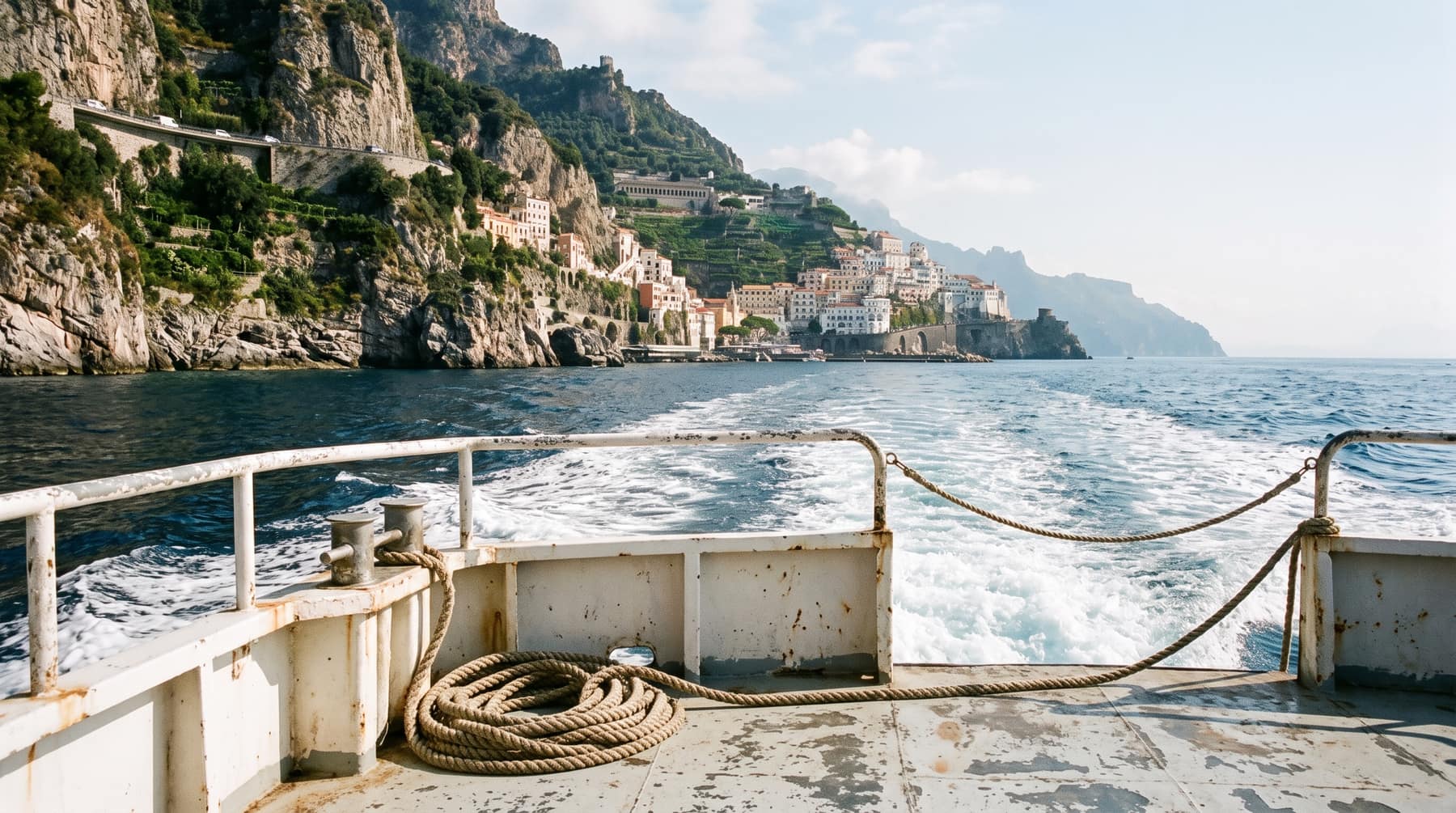
- Ferries. Town to town across the water in the season, roughly April to October. The view the road only hints at.
- The bus. Covers everything the boats don't, including the towns up the hill. Crowded, cheap, and it goes.
- Feet. The staircases between towns are older than the road and, on a busy afternoon, faster than it.
- A base with a pier. Sleep in a town the boats stop at and the whole coast is a day trip.
The way in decides it
Most people arrive from the Sorrento end, because that is what the search results say. It puts you at the far west of the coast with the whole road between you and everything else.
Come in from the other side. Fast trains from Naples reach Salerno in around forty minutes. The ferries leave from the waterfront, a short walk from the station — check which pier, there is more than one — and the crossing to Amalfi takes about thirty-five.
You arrive at a town from the water, which is how the town was designed to be arrived at, and you haven't touched the road.
The road is where the photographs are taken. The water is where the coast is. — The whole argument
What moves you instead
-
Across
The ferry, whenever it's running.
Amalfi and Positano are about twenty-five minutes apart by sea and an unknowable time apart by road. Treat the boats as the default. Buy the return when you land, not when you want to leave.
-
Up
The bus, for anything on the hill.
Ravello, the trailheads, the fjord at Furore — the bus does all of it. Tickets are bought before you board, at a tabacchi or a bar; the driver doesn't sell them. Buy several at once and expect to stand.
-
Down
The stairs, on purpose.
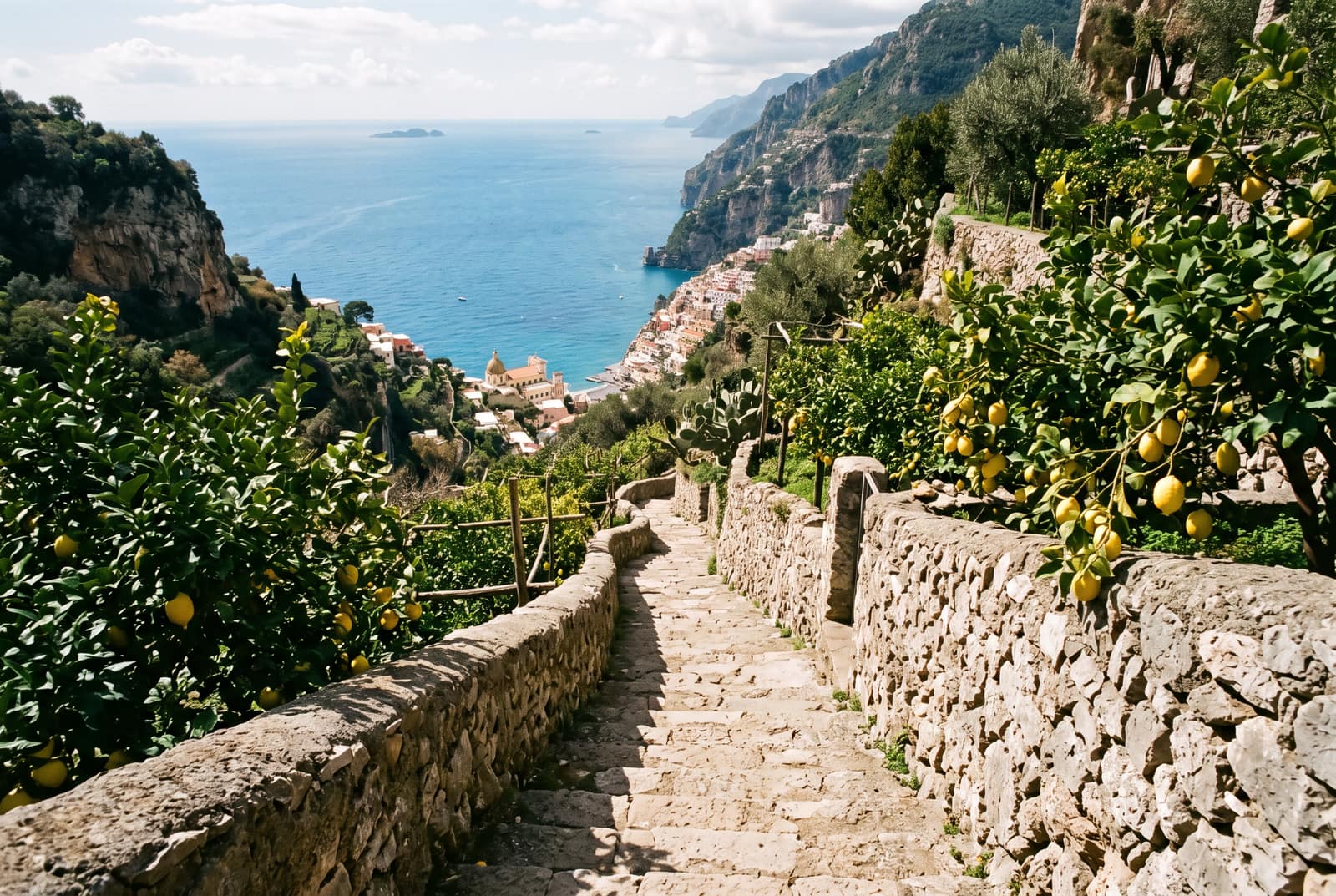
Ravello to Minori is about an hour of stone steps through lemon terraces. The Path of the Gods runs roughly seven kilometres along the cliff and ends in a long staircase into Positano. Both are transport as much as they are walks.
-
Once
A small boat, for a whole day.
The ferry shows you the coast in passing. One day on a small boat shows it at the speed it deserves — the sea caves, the swim stops, the towns from underneath. It is the one thing here worth booking ahead.
Before you pay for a boat day, ask three things: what is the hard maximum on board, is it shared or private, and which town does it leave from. A boat that starts somewhere else spends your morning getting to the coast you're already on.
The whole week, pin by pin and day by day: The Amalfi Coast Without a Car on RoundTrips.
Klook is where I filter rather than browse. It's a marketplace, so the descriptions are written to sell — the useful part is the structured fields underneath them: maximum group size, departure point, hours actually on the water, what's included. Set the departure town before you read a single description and most of the page disappears, which is the point.
Filter Amalfi Coast boat days on Klook →
That is an affiliate link. If you book through it, HowTo: Travel Edition earns a small commission and your price is unchanged. If the answer for your trip is the public ferry and a seat outside, that's still the answer.
Where it still goes wrong
The sea closes.
The common oneFerries don't run in rough water, and outside the season they barely run at all. On a bad day the whole coast falls back on the bus — and so does everybody else on it.
The fix is slack. Put the boat day in the middle of the week, not at the end, so there is a day to swap it with. And never make a ferry the only way to reach a train or a flight.
The other version is August. Everything here still works in high summer; it just works with a queue attached. The buses fill at the first stop and drive past the rest. If your dates are fixed, go earlier in the day than feels reasonable. If they aren't, May and late September are the same coast with room on it.
You're not giving up the drive. You're giving up the driving.
The drive people picture — window down, sea on one side, nobody ahead — exists early on a weekday, out of season. The rest of the year the road is a slow, narrow, shared thing, and being behind the wheel of it is work.
Nothing here is a sacrifice. The ferry is the better view, the bus is somebody else's problem, and the stairs are the part you'll describe to people afterwards.
The coast was built facing the water. Arrive the way it's facing.