
Nobody decides to go to Europe in July. They decide to go to Europe, and then discover the only weeks available to them are in July.
That's worth saying plainly, because the shoulder-season argument is usually made as though July travellers made a bad choice, and mostly they didn't — they made a choice about school terms and annual leave and when everyone else in the family could be in one place. If that's you, the rest of this doesn't apply, and July is fine. Go, book early, and pick your hours carefully.
But if your dates genuinely have give in them — if the reason you're going in July is that July is what people do — then you're paying a premium to have a worse time, and you should know exactly what you'd be trading.
What actually changes
The water in the Mediterranean is at its warmest in late summer, not midsummer; it takes the whole season to heat up and it holds that heat well into autumn. So the swimming is not a sacrifice. It's frequently an upgrade.
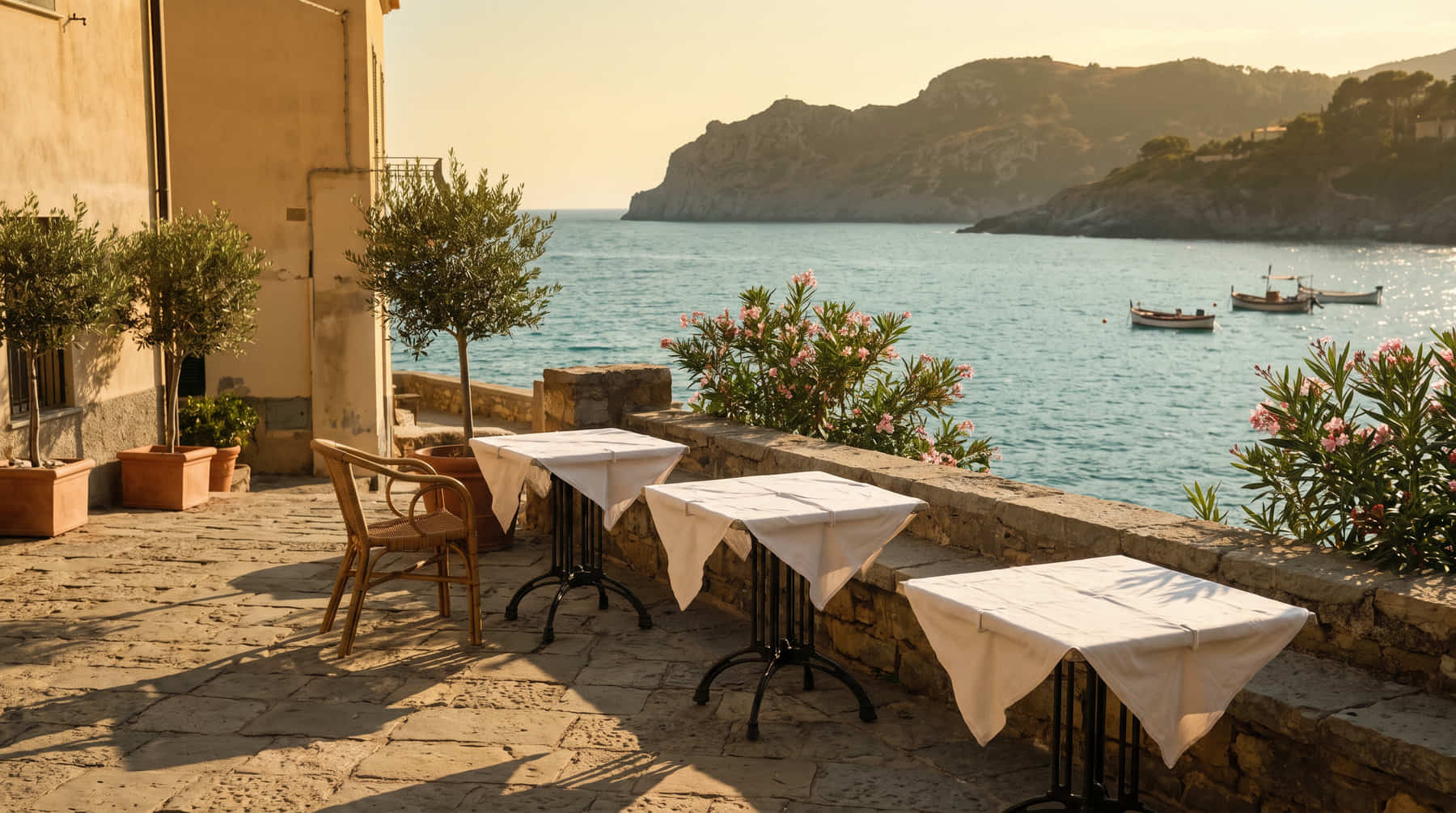
The light changes, and this is the part people don't anticipate. In July the sun is overhead for most of the usable day, which flattens everything — the buildings, the water, the photographs you take of them. By September it's coming in at an angle for far longer, and stone that looked white and hard in high summer turns the colour everyone came to see. Painters have been arriving in September for a very long time. It isn't a coincidence.
And the terraces are still open. That's the thing worth understanding about early autumn in southern Europe: the infrastructure of summer hasn't been packed away yet. The boat still runs. The kitchen still opens for dinner outside. You get the machinery of high season without the load on it.
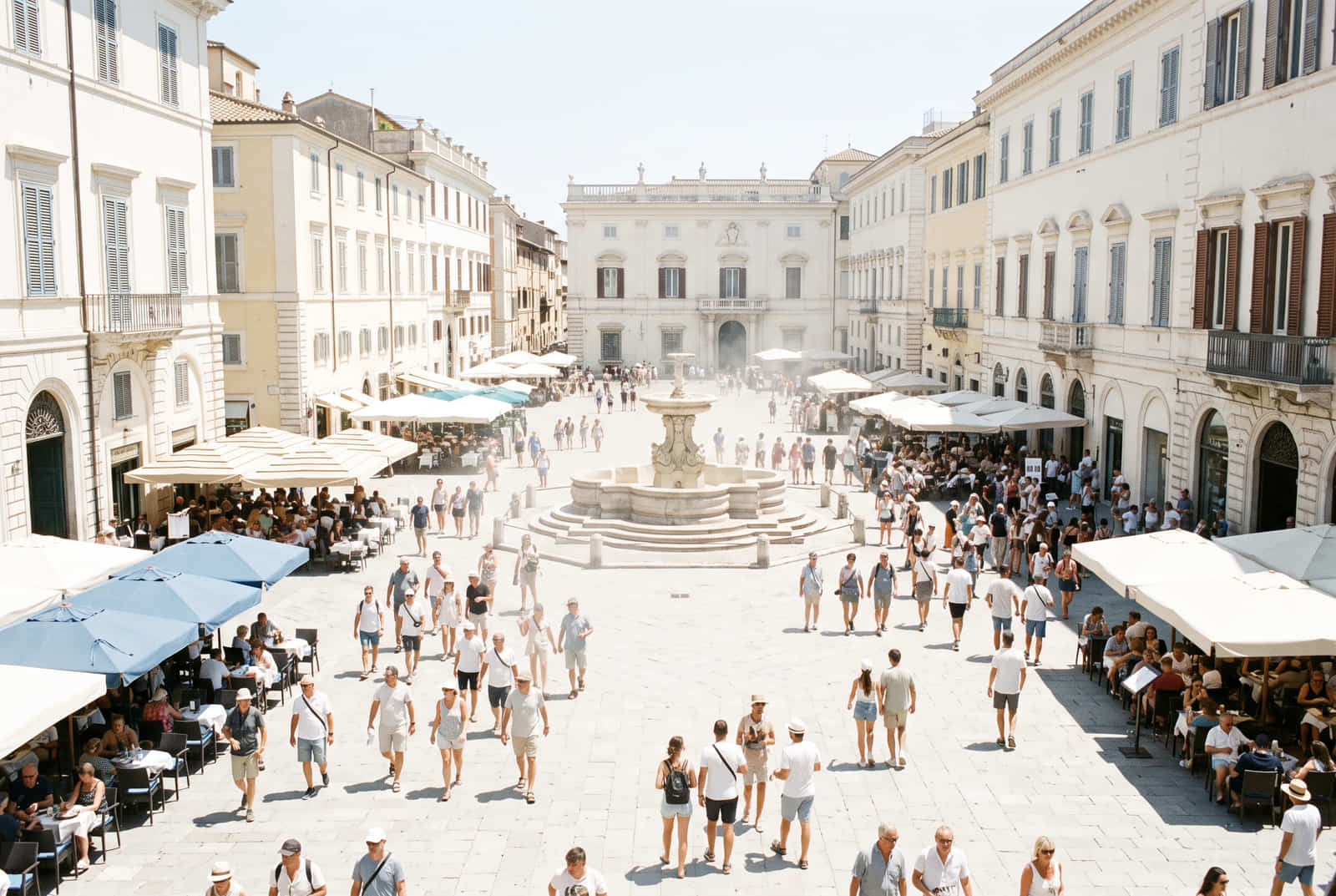
In August you queue for the thing. In September you sit in front of it. — The entire argument
What you're actually trading
Two real things, and they're worth naming rather than glossing over.
Weather variance. September in the Mediterranean is reliably warm and occasionally dramatic — the first proper rain of the season tends to arrive as a short, serious storm rather than a grey afternoon. It passes. But if your trip depends on five consecutive perfect beach days, midsummer is the safer bet, and I'd rather tell you that than pretend the risk isn't there.
Daylight. The evenings shorten noticeably from mid-September onward. If your idea of the trip is dinner outside at ten with the sky still light, that's a July thing and it doesn't survive the equinox. In practice this changes the shape of a day more than the quality of it — you start earlier and you're inside by eleven — but it is a genuine difference, not a technicality.
What you don't trade: opening hours, ferry schedules, or the sense that you've arrived somewhere after the party ended. That's October's problem in some places, and a real one. Early-to-mid September is not remotely that.
The week to avoid
The first days of September are not shoulder season. In much of northern Europe that's when August holidays end and everyone drives home, and in the Mediterranean it's when the last wave of August travellers overlaps with the first wave of people who thought they were being clever. Give it a week or ten days.
Then check the local calendar before you fix anything. Wine harvest festivals, patron saint days, and the trade fairs that fill northern cities all live in September, and a city hosting one of those is not a shoulder-season city that week — it is a full city with autumn weather. That's not a reason to avoid it. It's a reason to know, so you book accordingly instead of arriving surprised.
Aim for the second week of September through mid-October in the south, and the first three weeks of September in the north. Skip the first days of the month. Check for a festival or a fair before you commit to a city. Pack one warm layer and something waterproof you'd actually wear.
The fastest way to be persuaded is to price the identical trip twice. Put your dates in for July, then move the same number of nights into late September and look again — hotels, then flights. The gap is the part of the argument I can't make for you, because it depends entirely on where you're going, and it's usually larger than people expect.
Price both sets of dates on Expedia →
That is an affiliate link. If you book through it, HowTo: Travel Edition earns a small commission and your price is unchanged. Run the comparison either way — the point is the two numbers side by side.
Where it works hardest
The shoulder-season advantage scales with how badly a place is overloaded in summer. In a city that's busy year-round for reasons that have nothing to do with holidays, September is pleasant but not transformative. In a coastal town whose population multiplies in August — the islands, the small harbours, anywhere with one good beach and one road to it — the difference between August and late September isn't incremental. It's a different town.
Those are the places to move. Not the capitals. The ones where the crowd is the whole problem.
You didn't want the place. You wanted room in it.
Every complaint about a famous destination being ruined is really a complaint about density. The building is the same building. The view hasn't changed. What changed is how many people are standing between you and it, and how much of your day goes to negotiating around them.
Moving your dates is the cheapest fix available to anyone. It costs nothing, it requires no research beyond a calendar, and it does more for how a trip feels than any hotel upgrade you could buy.
If your weeks can move, move them.