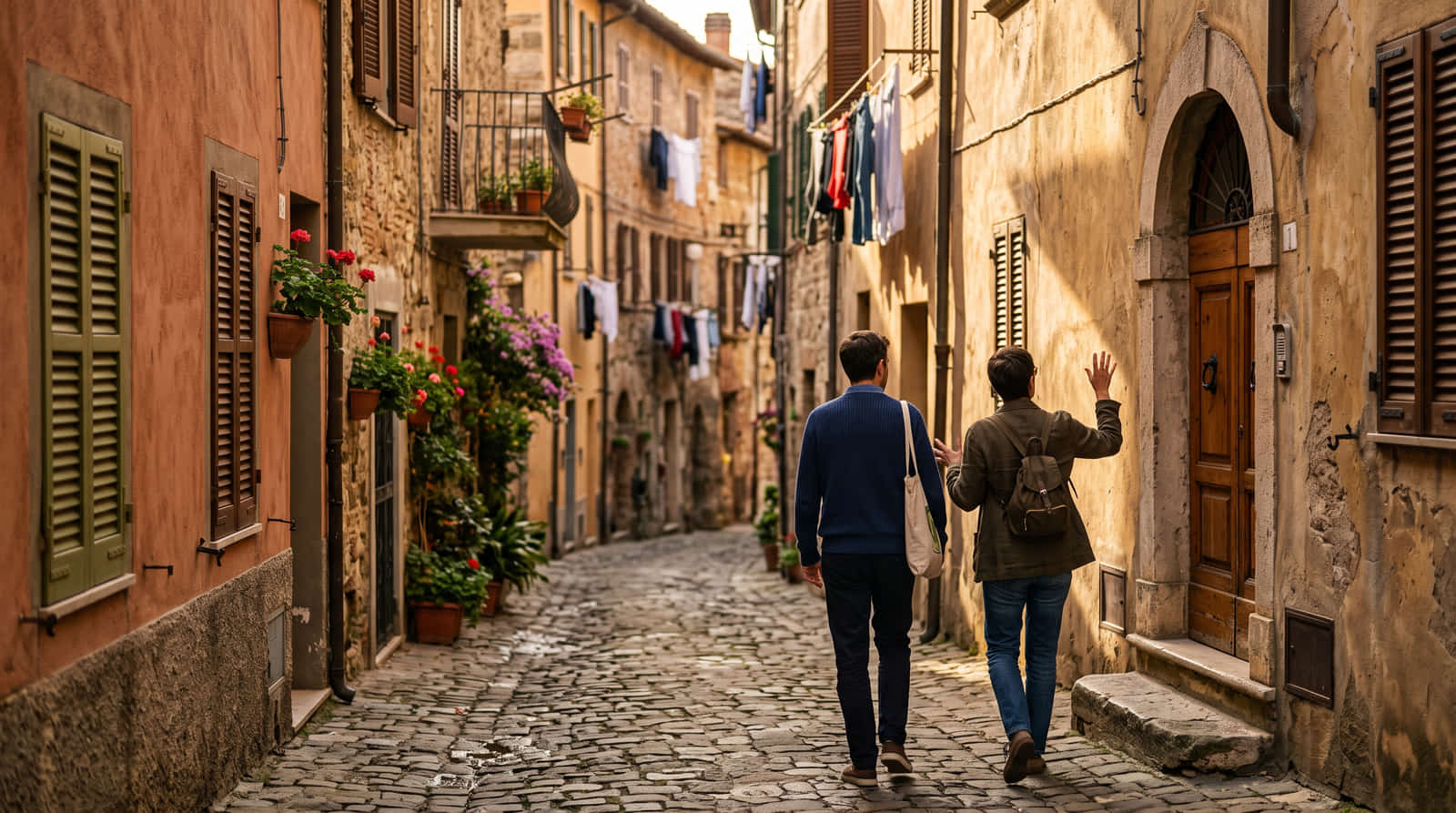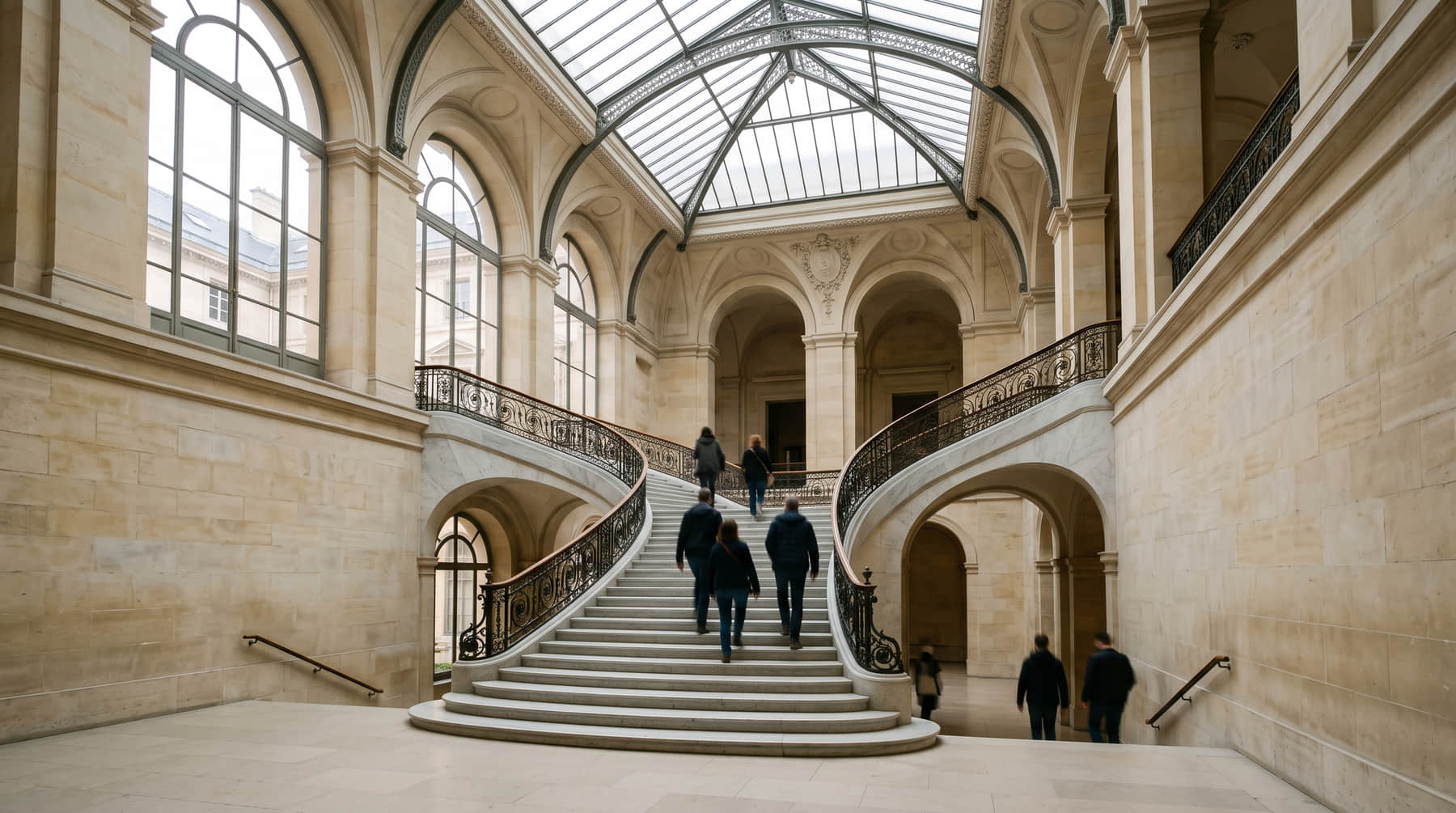
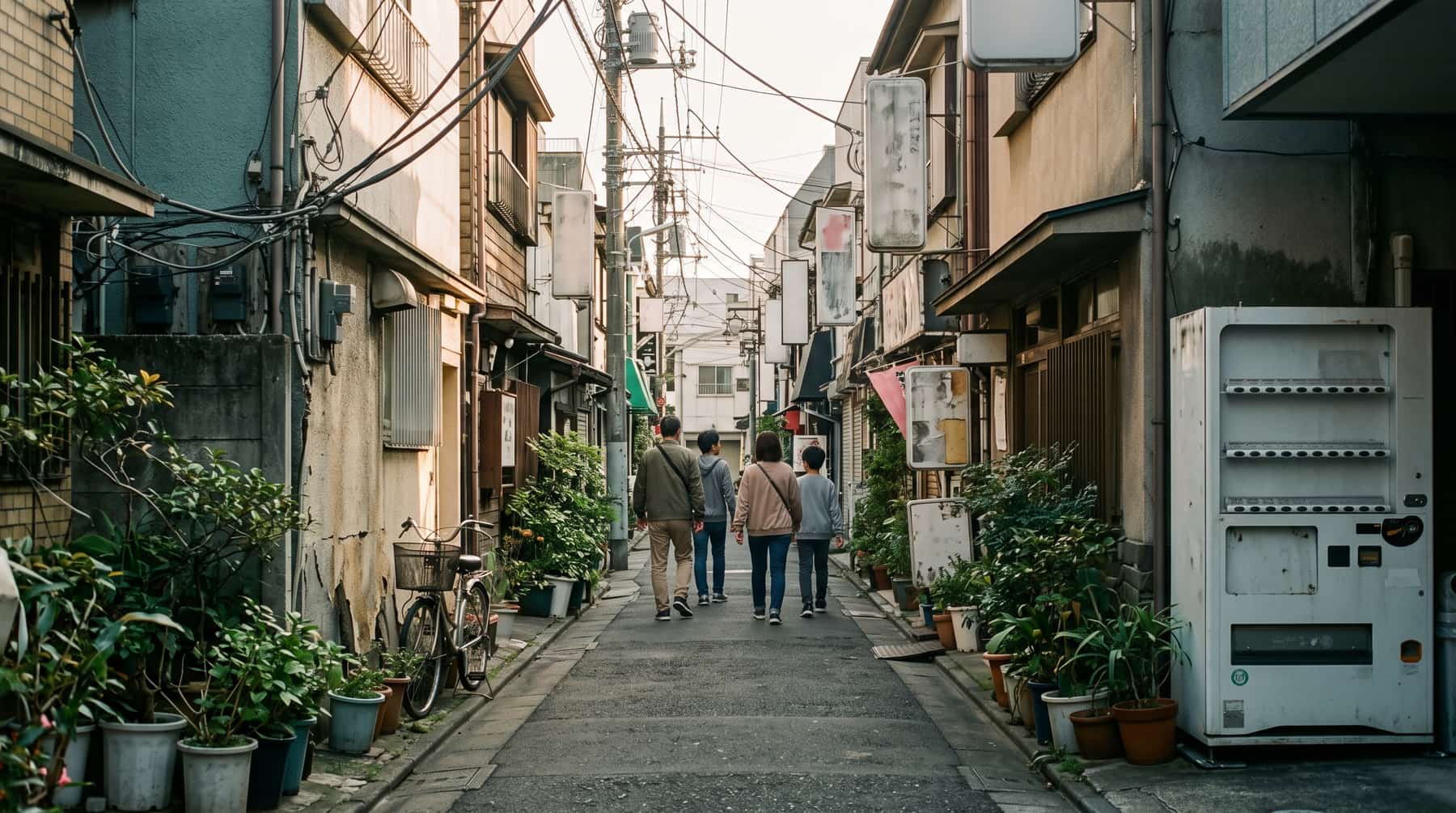
Four of you on a back street at nine in the morning, with somebody who knows what the buildings used to be. You stop because a question got asked, not because a schedule said stop.
That was a booking. You paid for it weeks ago, off a page that used the word tour, and the word is doing a great deal of damage in both directions.
It describes how the day was purchased — in advance, from a stranger, for a fixed sum. People read it as a description of how the day will feel. Those are two different claims, and in Tokyo they come apart more cleanly than almost anywhere else, because the thing that makes a tour feel like a tour is optional here in a way it isn't in most cities.
What actually makes it feel like one
Not the guide. Not the paying. Four mechanics, and every one of them is stated on the listing page, usually in the fields nobody reads.
Makes it feel like a tour
- A vehicle. Big enough that boarding is an event and leaving early is a negotiation with a driver.
- The count. Past roughly a dozen people, a guide stops answering questions and starts making announcements. Same person, different job.
- The commercial stop. A shop, a workshop with a till by the door, a tasting attached to a counter. Never the best thing you do that day, always in the itinerary.
- The return. Delivered back to where you started, at a stated hour, whether or not you want to be there.
Makes it feel like a day out
- A meeting point. A station exit. No manifest, no pickup window, no coach to find.
- A small number. Around half a dozen and it's a conversation. That is the entire mechanism.
- Trains. You move the way the city moves, which also means you can stop moving.
- An end, not a return. The day finishes wherever the day finished.
Read those as a filter rather than a preference. Most people book on the itinerary — the list of neighbourhoods, the promised dishes — and the itinerary is the least useful part of the page. Two operators covering identical ground can sell completely different days, and the difference is entirely in the left-hand column.
Tokyo is the easy case
The city is a set of centres strung along rail lines. Neighbourhoods resolve at the scale of a station, which is why Tokyo feels less like one enormous place than like forty medium ones that happen to touch.
That has a consequence people don't draw. In cities where the good things sit forty minutes apart down a motorway, the vehicle is load-bearing — you can dislike the coach, but it's doing real work. In Tokyo the train is faster, cheaper, and goes to more places, and every operator in the city knows it.
So a Tokyo day tour that puts you on a coach has chosen to. That's the tell, and it's a reliable one. The coach isn't there for the distance. It's there because one guide can handle thirty people if the thirty people are seated and facing forward, and because you cannot take twenty-eight people to a shop by train.
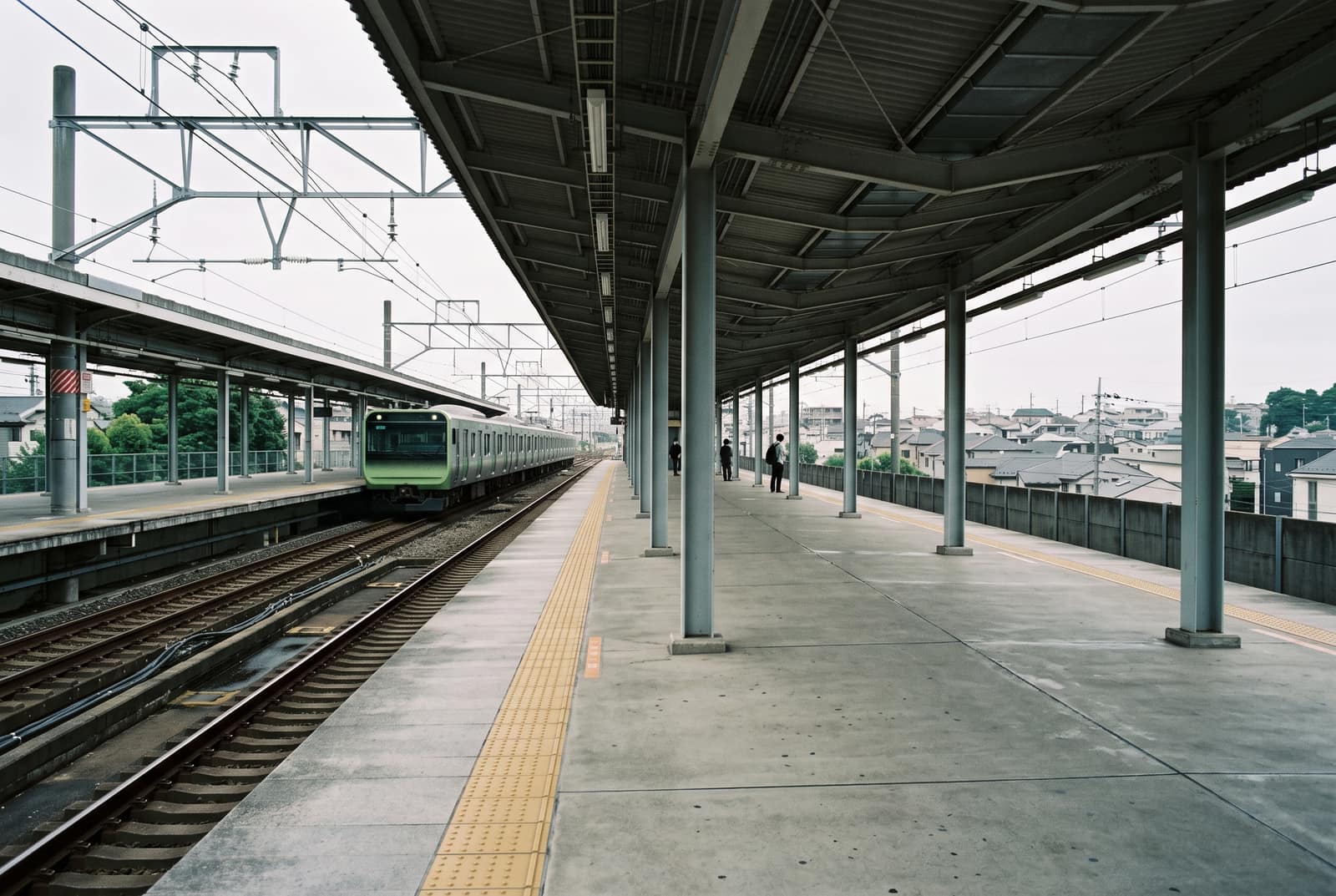
What the small operators do instead is unglamorous and works. You meet at a ticket gate. You walk. You ride two stops, you walk again, and at some point you are doing the thing residents do, which is not a spiritual experience — it's just a form of transport that happens not to insulate you from anything.
A coach in Tokyo isn't transport. It's a decision about how many of you there are going to be. — The tell
The shape of a day that works
-
How it starts
A station gate, not a hotel lobby.
Hotel pickup means a vehicle, and a vehicle means everything in the left-hand column. A meeting point at a ticket gate is the cheapest possible arrangement for the operator, which is precisely why the ones running small groups use it.
-
The first hour
One area, on foot.
The good ones spend the opening hour in a single neighbourhood instead of covering ground. It looks like a slow start and it isn't — you're being taught how to read a Tokyo street, and once you can read one you can read the rest of the city yourself for the remainder of the trip.
-
The middle
Something unplanned happens.
This is the actual test. Nothing unscheduled can occur inside a full itinerary, because there's no slack in it to occur in. Ask whether there's slack. A specific answer is a good sign. An enthusiastic one isn't an answer.
-
How it ends
You're left somewhere.
The best version finishes with the guide telling you what's worth doing next, in the place you already are, and then going home. You haven't been returned. You've been handed the afternoon with better information than you had at breakfast.
Message whoever answers the messages and ask two things: what is the hard maximum group size, and do we use the trains. The answers decide it. The speed and specificity of the answers decide most of the rest.
The whole week, pin by pin and day by day: Tokyo, East to West on RoundTrips.
Klook is where I filter rather than browse. It's a marketplace, so the descriptions are written to sell — the useful part is the structured fields underneath them: group size, meeting point, what transport is actually included, what the day ends with. Set the group cap before you read a single itinerary and most of the page disappears, which is the point.
Filter Tokyo day tours on Klook →
That is an affiliate link. If you book through it, HowTo: Travel Edition earns a small commission and your price is unchanged. If the answer for your trip is a day on your own with a transit card, that's still the answer.
Where it still goes wrong
You booked small and it wasn't.
The common one“Small group” is not a defined term. Some listings state a maximum and run at it. Others state a maximum and mean something closer to twenty, on the grounds that twenty is smaller than a coach.
The fix is one message before you pay. A number in a reply is worth more than a number on a page, and an operator who won't give you one has told you what you needed to know without meaning to.
The other version is quieter. A format that passes every test, run on a day when the city is at its most crowded — a public holiday, a festival weekend, the first warm Saturday of the season. Six people and a train still move badly through a station that is full. Check the local calendar for your dates before you book anything, the way you would before booking a hotel.
You're not avoiding tourists. You're avoiding the bubble.
The complaint about tours is almost always phrased as a complaint about being surrounded by visitors, and it isn't that. Plenty of good days in Tokyo contain thirty visitors. What people are reacting to is the bubble — a way of moving through a city that holds the city at a fixed distance for a fixed number of hours and then returns you to the lobby.
Tokyo will not punish you for hiring somebody. It's a large, precise, genuinely difficult city to read on a first pass, and a few hours with a person who reads it is one of the better purchases available to you there.
Buy the format. The itinerary is decoration, and everything you'd actually remember happens in the gaps it doesn't mention.