“Skip the line” is not a product. It's a phrase four different products are wearing.
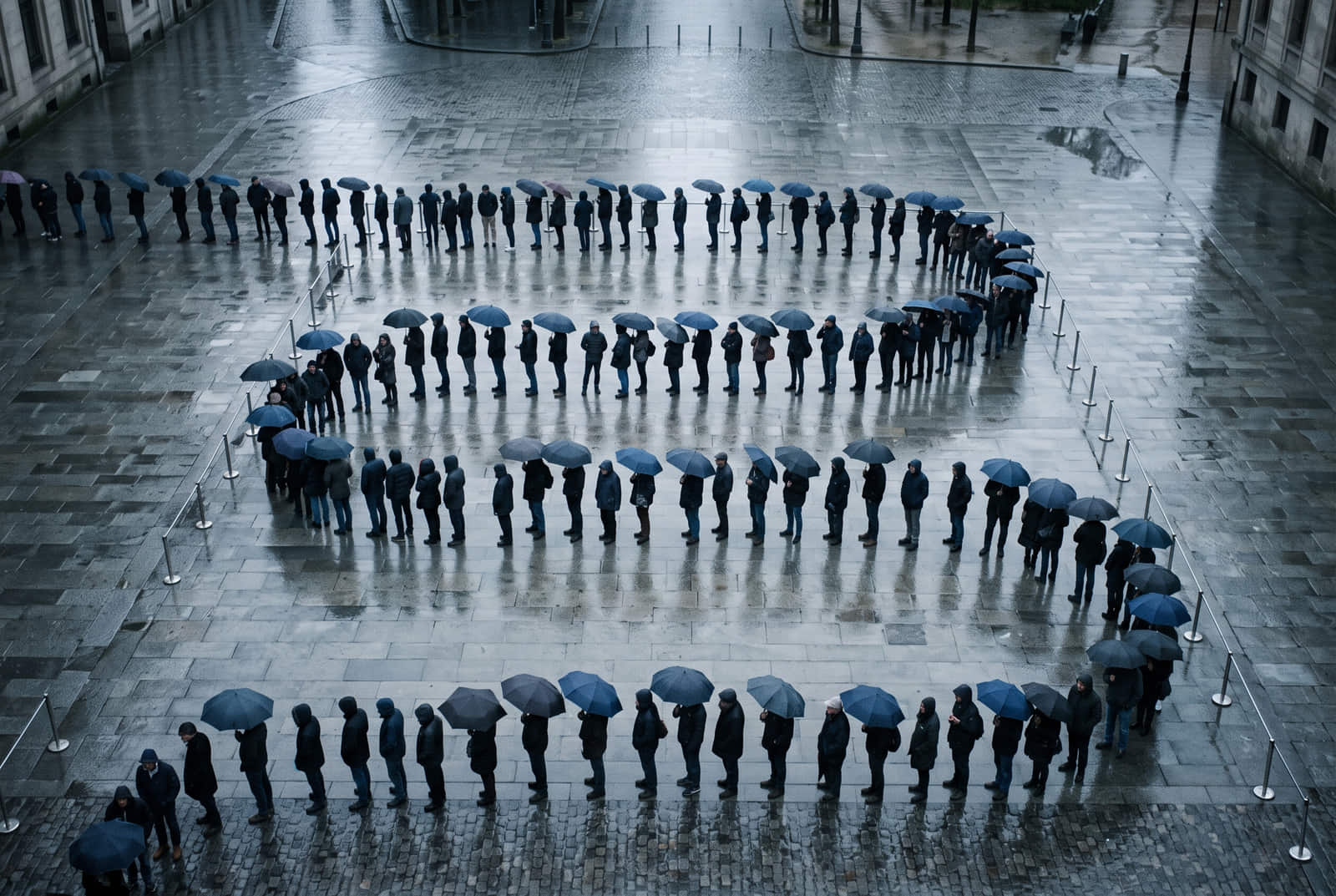
I've stood in the wrong queue holding the right ticket often enough to stop taking the label at face value. Not because anyone lied — because the words describe an outcome, and the listing underneath describes a mechanism, and those two things drift apart at exactly the museums where the queue is worst.
So here is the taxonomy. Once you can name which of the four you're buying, the decision takes about fifteen seconds.
Timed entry.
01You reserve a half-hour window. You arrive inside it and go to a door that isn't the main door. This is what most large museums actually sell, whatever the reseller calls it, and it's the one that works.
What it removes: the ticket-buying queue and the general-admission queue. What it leaves: a short line of people holding the same slot as you, and security. Ten minutes instead of ninety is a fair expectation. Zero minutes is not, and nobody sells zero.
Priority entry.
02A separate, shorter queue that exists all day. No slot, no window — turn up whenever and stand in the better line.
This is genuinely useful at attractions where the crowd is spread thin across opening hours, and close to useless at the ones where everyone arrives at eleven. Priority entry at eleven means standing in a shorter version of a very long line. Priority entry at nine means walking in.
A guided tour with entry included.
03The guide has a group booking, and group bookings enter through the group door. You are skipping the line by being, temporarily, part of a group.
Which is fine if you wanted a tour. It's an expensive way to save twenty minutes if you didn't, and it comes with a real cost that never appears in the listing: you are now on somebody else's route through the building, at somebody else's pace, for the ninety minutes you'd planned to spend on the two rooms you actually came for.
A city pass that includes the museum.
04The one that catches people. A pass gets you admission — it very often does not get you a reservation. At any museum that requires timed entry, you still have to go and book a slot, using the pass as payment, and the slots go the same way they always do.
If you buy the pass on the morning you want to visit the busiest museum in the city, there is a decent chance the answer is Thursday.
What a ticket can and can't do
It can skip
- The box office. The single longest queue at most museums, and the easiest one to delete.
- General admission. The line of people who turned up hoping.
- The sold-out problem — but only if you book far enough out that there was something to book.
It can't skip
- Security. Bag checks are not a ticketing product. Everyone stands there.
- The cloakroom. Which, in winter, is quietly the worst queue in the building.
- The room itself. A ticket controls the door, not the crowd in front of the painting.
A ticket controls the door. It has never once controlled the room. — The thing nobody sells
How I actually decide
Start at the museum's own website. If it sells the slot you want, on the day you want, buy it there — it's the cheapest version of the same ticket and the confirmation goes straight into your inbox in the museum's own system, which matters on the one day something goes wrong.
Go to a reseller when the official site can't help you: the slot is gone, the checkout only works in a language you don't read, the site rejects your card for reasons it declines to explain, or you want four attractions across three days on one confirmation instead of four accounts and four passwords. That's the whole case for a reseller, and it's a real one. It just isn't “they let you skip the line and the museum doesn't.”
Tiqets is the one I check first, mainly because the listings tell you which of the four types you're buying instead of making you guess — slot times up front, what's included stated plainly, and the ticket lands in your phone rather than in a PDF you have to hunt for at a turnstile.
Check museum tickets on Tiqets →
That is an affiliate link. If you book through it, HowTo: Travel Edition earns a small commission at no extra cost to you. Book direct with the museum when direct works — that advice doesn't change because of the link.
The slot is the whole decision
Given a choice of times, take the first slot of the day or the last two hours before closing. Tour groups land mid-morning and clear out by late afternoon; day-trippers are gone by five. The rooms are identical. The density isn't, and density is what you're actually paying to avoid.
The other thing worth doing costs nothing: look at the museum's floor plan before you go, and pick three things. Not a list of forty. Three. Everything else is a bonus you'll enjoy more for not owing it anything.
Book direct if you can, book timed entry not priority, take the earliest or latest slot on offer, and accept that you're still standing in security. Everything else is marketing.
The queue was never the problem.
The reason a bad museum day feels bad isn't the ninety minutes outside. It's that you spent them, and then walked into rooms you were already tired of, and moved through them at the speed of the person in front of you, and left with the specific flat feeling of having done a thing rather than seen it.
A good ticket buys back the ninety minutes. Choosing the right hour buys back the rooms. They're different purchases, and only one of them costs money.