THE BOOKING DESK · FLIGHTS · 10 CHAPTERS
Book Flights — like someone who does this for a living.
The booking window is real. The tools are knowable. The seat map is not a mystery. Ten chapters — timing, fares, cabins, seats, baggage, miles, routing, red-eyes, airports, and codeshares — and one personal essay on the feeling at the gate, by Zoe.
- 10 chapters — every flight-booking decision
- 3–4 months — best international booking window
- $487 — average saved when booking inside the window
- 9.1 — reader confidence score after the full sequence
Chapter I — The ten chapters of flight booking.
Every decision a flight-booker actually faces — from the first Google Flights tab to the seat map at check-in — organized into ten chapters with real articles inside each one.
-
01 · The Booking Window — By Route
Domestic: 6–8 weeks. International: 3–4 months. Peak Europe or Japan: 5–6 months. The window is real, the data is overwhelming, and last-minute fares are almost always more expensive than people remember. 12 guides, timing and price.
-
02 · The Fare-Finding Stack
Google Flights for the calendar view. Hopper for fare predictions. Going (formerly Scott's Cheap Flights) for home-airport error fares. The airline's own site for the final booking — never an OTA on long-haul. Four tools, one system. 8 guides, tools and OTAs.
-
03 · Seat Selection
Window vs aisle is the wrong question. Row 14 vs row 32 is the right one. Exit rows, bulkheads, seats that recline into someone else, seats that don't recline at all — and who gets to choose on a long-haul overnight. 6 guides, comfort and cabins.
-
04 · Cabin Classes Decoded
Economy, premium economy, business, first. What you actually get in each, when the upgrade math works, when it doesn't, and the one route type where premium economy is almost always worth the extra money. 9 guides, upgrade and value.
-
05 · Layovers
60 minutes domestic, 90 international — the floor. Above that, how to pick a connection that isn't a sprint through Terminal D and isn't a 9-hour wait in a seat with a USB port that doesn't work. 7 guides, connections and hubs.
-
06 · Baggage Fees
The carry-on wars, checked-bag economics, and why basic economy is rarely the deal it looks like when you add a bag fee and a seat selection fee to the headline price. What the airlines charge, when to check, and the one bag size that gets through every time. 5 guides.
-
07 · Miles Redemption
The basics: use miles for long-haul business class, not domestic economy. Partner awards, transfer partners, and the two sweet spots worth knowing — without turning your life into a spreadsheet of partner charts. 10 guides, points and awards.
-
08 · Multi-City & Open-Jaw Tickets
Fly into one city, out of another — and pay less than the roundtrip. How open-jaw tickets are priced, when multi-city beats roundtrip, and the routing tricks that save $200 without saving any time. 6 guides, routing and one-way fares.
-
09 · Red-Eye vs Day Flight
Red-eyes save a hotel night but cost a morning. Day flights cost more on the fare and waste a day but land you functional. The math depends on the destination, the trip length, and how well you sleep on planes. Here's how to run it. 4 guides.
-
10 · Airport Selection
The cheaper fare from the secondary airport costs $40 extra in ground transport and two hours of your life. When the alternate airport wins, when it doesn't, and the cities where the secondary terminal is actually better — faster security, shorter taxi, more direct routes. 5 guides.
-
By Zoe · The First Time You Fly Alone
I've flown 40-plus countries. I still get a version of the same feeling at the gate — somewhere between dread and electricity. This is what I've learned to do with it. Personal essay, 8 min read.



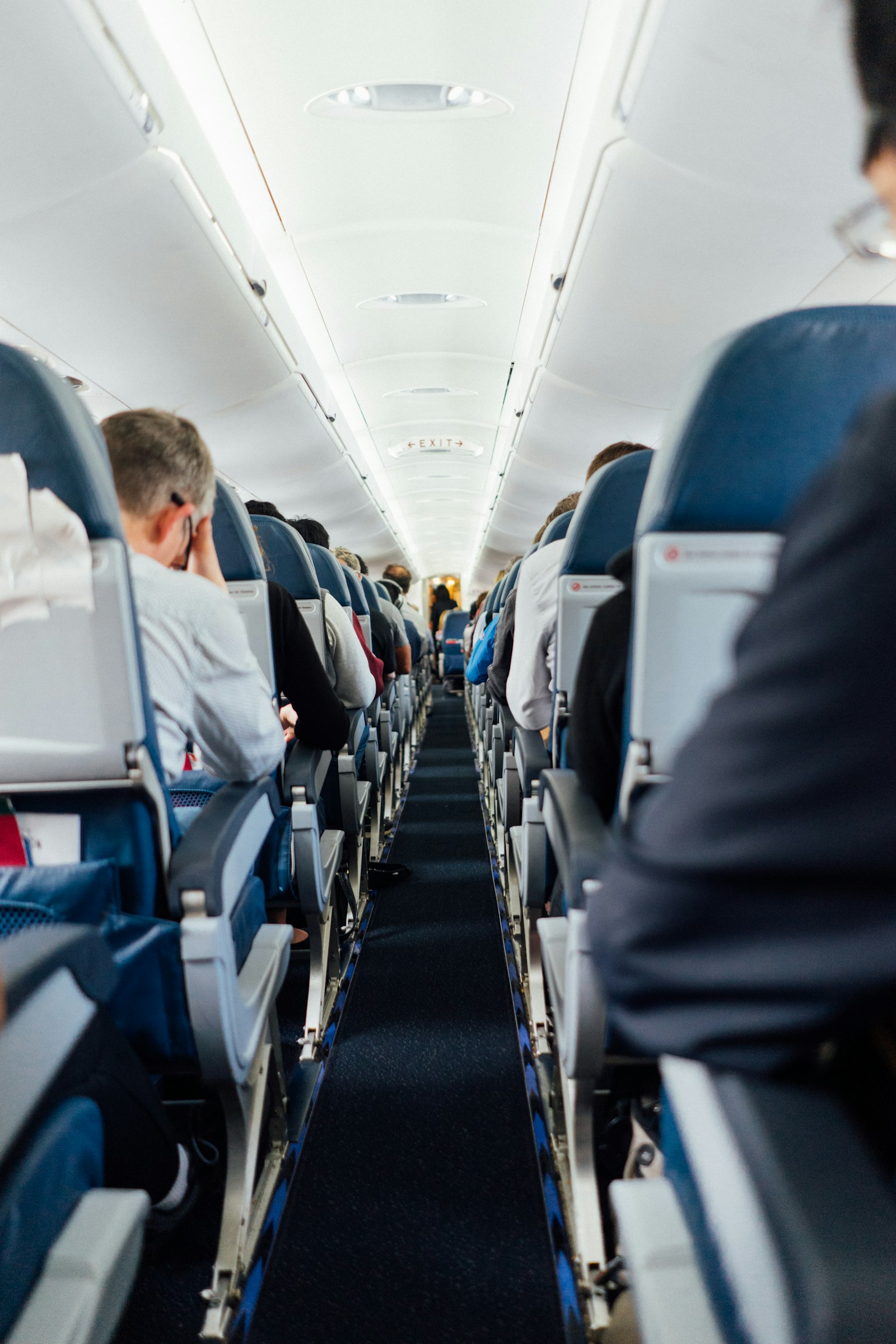







Chapter II — Field notes from the booking desk.
The patterns that hold across every route, every cabin class, every type of traveler. From the desk that has watched thousands of bookings get made, mostly correctly, sometimes expensively.
"The window is real. The data is overwhelming. Last-minute fares are almost always more expensive than people remember." — Iris Mendoza, Senior Editor, Book Desk.
People ask when to book as if the answer changes constantly. It doesn't. The booking window for domestic US routes is 6–8 weeks. For international it's 3–4 months. For peak-demand routes — Europe in July, Japan in late March, any December school break — move to 5–6 months. The data behind these numbers comes from studies of hundreds of millions of bookings. They keep producing the same answer.
The mistake most travelers make isn't booking too late. It's second-guessing a good fare by $40. The window closes. The fare goes up. The seat assignment gets worse. You book the same flight for $180 more in the middle seat of row 42.
The fare-finding stack — four tools, no more
- Google Flights. Use it for the calendar view, the price grid, and price alerts. Set an alert for your route the day you decide on the destination. Read the chart every 3–4 days. The trend is usually clearer than the individual data points.
- Hopper. Better than Google Flights for predictions on domestic routes and for travelers who can't book immediately. The "watch" function is worth the notification noise. The "freeze the price" feature is expensive and usually not worth it unless you're booking a group of four or more.
- Going (formerly Scott's Cheap Flights). The best source for error fares and genuine mistake pricing from your home airport. Set it to your top five departure airports. Most alerts are domestic or short-haul international — treat the occasional long-haul alert as a lottery ticket and be ready to book within 30 minutes.
- The airline's own site. For the final booking on any international route. When something goes wrong — and eventually something will — the airline prioritizes customers who booked direct. The OTA adds a middleman between you and the rescheduling desk. Remove the middleman.
Seat selection — the question most travelers get wrong
The question is not window vs aisle. The question is row 14 vs row 32. And behind that: what aircraft is this, what is the seat pitch in each section, does this row have an immovable seat-back in front of it, is this the row in front of a galley where people stand for four hours?
SeatGuru, now integrated into TripAdvisor, remains the most reliable annotated seat map database. Run your flight number the day you book. Pick a seat with green. Avoid seats marked red. Accept the yellow seats on long-haul only if you have a specific reason — extra legroom, proximity to the front galley — that outweighs the trade-off.
Bulkhead rows have more legroom and no pocket in the seat in front. They also have bassinet mounts for infants and are usually assigned to families with lap children. If you are not traveling with an infant, weigh the legroom against the ambient noise of the row.
Exit rows have the most legroom on the plane. They require you to acknowledge willingness and ability to assist in an evacuation, which is not a formality — it is a legal acknowledgment that the airline takes seriously on some carriers. Exit row seats do not recline. This is the trade.
Cabin classes — when the math works
Economy is survivable for any flight under 6 hours. Above that, the arithmetic of the upgrade changes. Premium economy on transatlantic or transpacific flights — typically 8–14 hours — runs $200–$400 above economy on most carriers. For that money, you get 4–6 more inches of seat pitch, a wider seat, and better meal service. On an overnight flight where sleep matters, the upgrade frequently pays for itself in the quality of the first two days at the destination.
Business class math only works in two scenarios: you're paying with miles (the redemption value of business class awards is 4–10x the value of economy redemptions, which is why miles are worth using for business), or your employer is paying. If you are paying cash for business class on a trip under 10 hours, the math rarely clears on a per-hour basis.
First class on domestic US routes is a category error. It is a wider seat and a better meal at 10–20x the price. The absolute value is often fine; the relative value is almost always not.
Miles redemption — the two rules that matter
Rule one: use miles for long-haul business class or international premium economy. Never for domestic economy. The cents-per-mile value of a domestic economy redemption is 0.8–1.2 cents. The cents-per-mile value of a long-haul business class redemption is 3–8 cents. Same currency, dramatically different value.
Rule two: transfer partners change the math. Chase Ultimate Rewards, American Express Membership Rewards, Capital One Miles, and Citi ThankYou points are all transferable to multiple airline programs. The sweet spots change as programs devalue and partners shift. The constant is: check the partner chart before assuming your miles are stuck in one airline's program.
Open-jaw and multi-city — the routing trick most travelers miss
An open-jaw ticket flies you into one city and out of another. Fly into Paris, out of Rome. The airline prices this based on the average of the two one-way fares, which frequently undercuts a roundtrip to one city plus a positioning flight. The math works best when you were planning to end your trip in a different city anyway — the open-jaw formalizes the routing without the premium of booking two separate tickets.
Multi-city extends this: three or more cities, each leg separately priced, combined into one itinerary that the airline treats as a connected booking. Useful for round-the-world trips, for large circuits through a continent, and for any itinerary where returning to the origin city would add an unnecessary leg. The trade-off is complexity — multi-city itineraries require more research and are harder to rebook if a leg changes.
Red-eye vs day flight — run the math
Red-eye flights save a hotel night. They cost a morning at the destination. The math favors the red-eye when: the trip is 10 days or longer (the lost morning at the destination is less significant), when you sleep well on planes, and when the destination requires immediate activity the day you arrive. The math favors the day flight when: the trip is 4–5 days (a lost morning is 20–25% of usable time), when you cannot sleep on planes, and when the destination requires you to be functional immediately on arrival.
Airport selection — the secondary airport arithmetic
The secondary airport fare is cheaper. The secondary airport is also $40 of ground transport and 90 minutes further from the city center. Do the math. A $60 fare saving that costs $40 in ground transport and $30 of time cost is a $10 saving. The primary airport exists for a reason: it is usually better connected. The secondary airport beats primary when the route is served exclusively from secondary, when you live closer to secondary, or when the fare savings genuinely exceed $60 after you net out ground transport.
- 3–4 months — the sweet spot for international booking.
- $487 — average saved per trip when booking inside the window.
- 8 hours — the threshold where premium economy math flips.
- 3–8¢ — cents per mile on a long-haul business redemption vs 0.8–1.2¢ on domestic economy.
- 9.1/10 — reader confidence score after completing the full sequence.
Chapter III — Where to start?
Four questions. Four answers. The recommendation updates as you go. Change your mind whenever — there is no submit button.
- How far out are you booking? Under 3 weeks · 1–3 months · 3–6 months · Over 6 months.
- Your route is… Domestic hop · Short-haul international · Transatlantic or Pacific · Open-jaw or multi-city.
- Comfort matters… Just get me there · A little — 8-hour flight · Yes — I need sleep · Fully — business or first.
- You have miles? None · Some economy miles · A lot and flexible · Business-class miles.
Chapter IV — The reading list for flight-bookers.
Six pieces from the booking desk. One personal essay from Zoe. All worth a quiet hour before you open a search tab.
- How To Find Cheap Flights Without Tedious Tab-Hopping. Method, 8 min.
- The Booking Window — Why the Data Wins Every Time. Strategy, 7 min.
- Miles 101 — The Only Points Strategy You Actually Need. Loyalty, 9 min.
- The Seat Selection Map — Every Aircraft, Annotated. Comfort, 6 min.
- Open-Jaw Tickets: The Trick Most Travelers Miss. Routing, 10 min.
- The First Time You Fly Alone. By Zoe, personal essay, 8 min.
Chapter V — Frequently — but quietly — asked.
- When is the best time to book a flight?
- For domestic US routes: 6–8 weeks out is consistently the sweet spot. For international: 3–4 months. For peak Europe summer, Japan cherry blossom, or December school holidays: 5–6 months. The window is real — studies of hundreds of millions of bookings keep landing on the same numbers. Last-minute fares are almost always more expensive than people remember, not less.
- Should I book directly with the airline or through an OTA?
- For long-haul international, always book direct with the airline. When something goes wrong — a cancellation, a missed connection, a schedule change — the airline prioritizes customers who booked direct. OTAs are useful for price discovery and comparison, but the final booking should be on the carrier's own site. Exception: if an OTA is showing a significantly lower price on a simple domestic hop, that's a judgment call worth making.
- What is the minimum layover time I should accept?
- 60 minutes for domestic connections within the same airport. 90 minutes for international connections. 2+ hours if you're clearing customs and immigration. These are floors, not targets — if the airport is large (ORD, ATL, CDG, DXB) or the first flight is historically late, add 30–45 minutes. A missed connection on international is a hotel night and a 24-hour delay. The 45-minute fare savings rarely covers it.
- Is premium economy worth the upgrade from economy?
- On flights over 8 hours, yes — almost always. The extra 4–6 inches of seat pitch and the wider seat make the difference between arriving functional and arriving wrecked. On flights under 6 hours, economy is survivable. The upgrade to premium economy on transatlantic or transpacific flights runs $200–$400 over economy and is usually worth it. Business class math only works if you're using miles or your company is paying.
- How do open-jaw tickets work and when do they save money?
- An open-jaw ticket flies you into one city and out of another — fly into Paris, out of Rome — without requiring you to return to the origin city. Airlines price these based on the average of the two one-way fares, which often beats a roundtrip to one city plus a separate one-way home. They work best on multi-country itineraries where a roundtrip to one hub would require expensive repositioning flights.
- What is the difference between a codeshare and an interline agreement?
- A codeshare means two airlines share the same flight — one operates it, the other sells it under its own flight number. An interline agreement means two airlines honor each other's tickets for connecting flights. Codeshares usually mean seamless baggage through-check and coordinated schedule protection if you miss a connection. Interlines are less reliable. When booking multi-leg itineraries, confirm your connection is codeshare, not just interline.
- When does it make sense to use a travel agent?
- For complex multi-destination itineraries, business class award bookings using miles, cruises with air, or destinations with difficult visa or security situations. A good travel agent earns commission from suppliers, so they don't cost more. They earn their keep when the itinerary has four or more legs or when something goes wrong and you need someone to call — not when you're booking a simple roundtrip to one city.
The window opens. Book when it does.
The data is clear. The tools are built. The desk is on call. Stop hunting tabs and start with the chapter that matches your situation — the booking window, the seat map, the cabin class, or the miles redemption. All ten are here.